On this page
The short answer: Arcads costs approximately $110 per month for about 10 videos, which works out to roughly $11 per finished video. Those figures are third-party estimates, because Arcads publishes no pricing page and offers no free trial; the only authoritative number is the one Arcads quotes you inside the funnel. Here is the picture in one table:
| Question | Answer (2026) |
|---|---|
| Entry plan | ~$110/month (third-party estimate, unconfirmed) |
| What you get | ~10 AI UGC videos/month |
| Cost per video | ~$11 (estimate) |
| Public pricing page | No |
| Free trial | No |
| Cost unit | Per video: every variation you test is another ~$11 |
Verify current rates with Arcads directly before budgeting; without an official rate card, any number you find (including these) is reconstructed from user reports and reviews.
That covers "how much is Arcads." The rest of this post covers the question hiding behind it: whether per-video economics fit what you are testing at all, especially if you sell a physical product. Arcads is a genuinely strong tool at what it does, which is AI UGC video: synthetic actors reading your script with convincing lip-sync. But the format and the economics only make sense for certain sellers. If you want the wider field first, we keep an honest AI ad generator comparison that maps the whole category.
Why Arcads pricing is so hard to pin down
Most AI ad tools put a pricing table on the homepage. Arcads does not, which means the numbers you find are pieced together from user reports, reviews, and third-party write-ups rather than an official rate card. Treat everything in the next section as an approximation, not a quote. The only authoritative source is Arcads itself once you are inside.
The reason this matters is math, not mystery. When you cannot see the per-unit cost up front, you cannot model your cost per test before you commit. For a brand that lives and dies by cost per acquisition, that is real friction, and it is the single most common reason people search for an Arcads alternative in the first place.
What the estimated pricing means in practice
Take the ~$110/month, ~$11/video estimate at face value and the picture is clear enough to reason about:
- Per-video economics. At roughly $11 a video, the unit is the video. Every variation you test is another unit of cost, and UGC testing usually means many variations.
- No free trial. You cannot generate a test asset to judge quality before paying, unlike tools that let you kick the tires first.
- Opaque scaling. Without a public table, it is hard to know how cost per video moves as you go up tiers.
None of that makes Arcads bad. It makes it a considered purchase rather than an impulse one, and it makes the fit question worth answering carefully.
What Arcads is genuinely good at
Credit where it is due: Arcads is one of the more convincing AI UGC video tools available. Its core strength is actor realism and lip-sync. You write a script, pick a synthetic presenter, and the output reads like a real person talking to camera. That is the whole game for UGC-style creative, and Arcads does it well enough that the results hold up in-feed. If your winning format is a talking-head testimonial or a founder-style pitch, this is what the tool is built for.
It is also a strong fit for digital products and offers where the story lives in the script, not in the physical object. Apps, courses, subscriptions, SaaS, info products: things a person can credibly talk about without the product being shown in accurate detail. When the actor and the words carry the message, video-first makes sense and Arcads delivers it fast.
Where it falls short for physical products
Physical goods are a different problem, and this is where the format starts to fight you. The first issue is the per-video economics covered above. Physical-product testing is a volume game across audiences, angles, and hooks. When each unit is a full video at an estimated ~$11, testing 15 to 20 distinct concepts gets expensive fast, and you often want that spread before you know which angle wins.
The second issue is product fidelity. A synthetic actor talking about your product is not the same as showing your product accurately. For a snack brand, a supplement, a shoe, or a skincare tube, buyers respond to the object itself: texture, packaging, label claims, price. A talking head can gesture at those things but cannot render them the way a product-accurate static creative can.
Third, sentiment is mixed. Some third-party reviews report an Arcads Trustpilot score around 2.8 out of 5, with complaints touching billing and output consistency. We flag this as reported, not certain: review scores move, they skew toward frustrated users, and you should read current reviews yourself rather than treat any single number as settled. The honest summary is that satisfaction appears uneven, one more reason to test cheaply before committing.
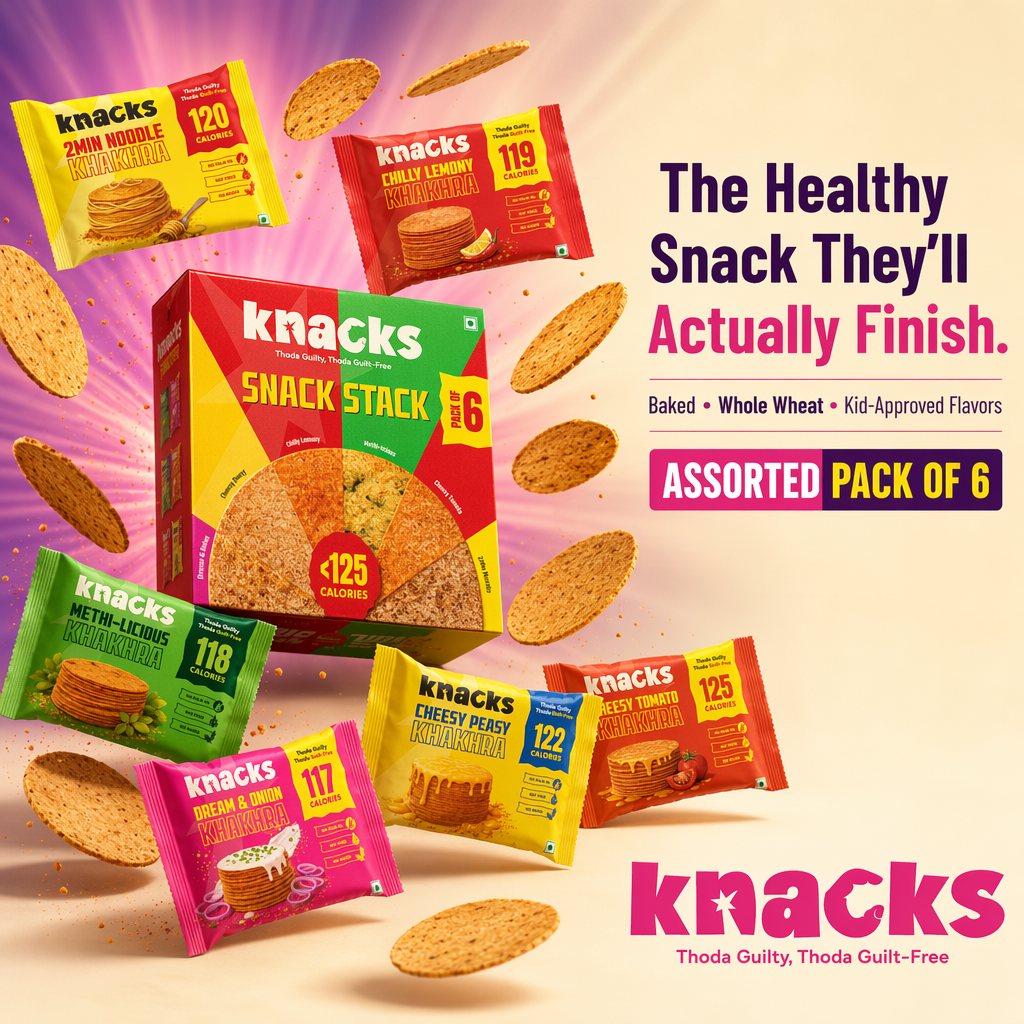
A real LocalAds static run for the snack brand Knacks: the full flavor range in frame with real calorie counts, angled on ingredient transparency. This is the product-accurate, claim-forward creative a talking-head video cannot easily replicate for a physical good.
The alternative depends on what you are testing
There is no single "best Arcads alternative," because the right answer depends on the format you actually need. Sort yourself into one of two lanes.
If you need synthetic-actor UGC specifically, stay in that lane. Creatify and EzUGC both generate AI UGC video, and in the Arcads vs Creatify comparison people run most often, Creatify's larger avatar library and published pricing make it easier to model cost before you commit. If a talking-head or lip-sync format is your proven winner, an avatar-native tool is the right home. LocalAds does not make talking-head UGC, and we will say that plainly.
If you sell a physical product and want product-accurate creative (the format that usually wins for physical goods), avatar-first is the wrong starting point. This is where LocalAds fits: you paste one product URL and it builds a strategy tree of audiences, each with its own angle and hook derived from the actual page, then renders on-brand static creatives sized for Meta, TikTok, Pinterest, and YouTube, any of which you can animate into short video ads from the same workspace. Roughly one credit per creative, product and claims accurate, no per-video math.

A real LocalAds output for the protein-wafer brand SuperYou. The ingredient and macro claims are pulled straight from the product page, so the creative stays accurate to what the brand actually sells: the product fidelity per-video UGC struggles to match at scale.
Where LocalAds fits
To be exact about the difference: LocalAds also makes UGC video. It generates 30-second creator-led UGC video ads with AI voiceover, built from your product page and the audience and angle strategy behind it, alongside static creatives and animate-to-video versions of them. What it does not offer is Arcads' model of browsing a roster of named stock actors and lip-syncing a written script to the one you pick. If casting a specific recurring presenter is the thing you are buying, that is Arcads' genuine strength.
Its core job is the part physical-product brands actually struggle with: turning one product page into a real testing strategy of on-brand, product-accurate creatives. Each creative maps to a distinct audience and angle, so a losing ad tells you which branch to kill rather than just "the blue one lost." The unit economics run the other way from per-video pricing: Starter is $149 per month for roughly 150 creatives and Pro is $299 per month for around 400, at roughly one credit each, with a 3-day free trial (card required) to judge output first. There is also AI product photography and Amazon listing images (9 per ASIN) from a URL. For why static, strategy-led output tends to win for physical goods, see our guide to the best AI ad creative tool for D2C brands.
Arcads vs the alternatives
| Arcads | Creatify / EzUGC | LocalAds | |
|---|---|---|---|
| Format | AI UGC video (synthetic actors) | AI UGC video | Static creative + animate-to-video + product photography + Amazon images |
| Best for | Digital products, script-led offers | Cheaper UGC video at volume | Physical products, on-brand static, Amazon |
| Pricing | ~$110/mo, ~10 videos (est., third-party) | Published, per-plan | $149/mo ~150 creatives; $299/mo ~400 |
| Free trial | No | Varies (Creatify offers a free tier) | Yes, 3 days (card required) |
| Cost unit | ~$11 per video (est.) | Per video | ~1 credit per creative |
| Product accuracy | Actor-led, not object-accurate | Actor-led | Product and claims accurate from the URL |
Pricing figures for Arcads are third-party estimates, not official. Verify all current rates directly with each tool before budgeting.
FAQ
How much does Arcads cost? Arcads does not publish an official pricing page, so exact numbers are hard to confirm. Third-party sources put the entry plan at roughly $110 per month for about 10 videos, which is around $11 per video. Treat that as an estimate and verify current pricing directly with Arcads, because it is not officially confirmed and can change.
Does Arcads have a free trial? Based on available information, Arcads does not offer a free trial, so you generally cannot generate a test video to judge quality before paying. If trying before you buy matters to you, look for a tool that lets you generate first: LocalAds, for example, runs a 3-day free trial (card required) so you can see real output on your own product before the first charge.
Arcads vs Creatify: which is better for UGC video? Both make AI UGC video. Arcads is known for convincing actor realism and lip-sync, while Creatify tends to win on avatar library size and published, easier-to-model pricing. If UGC video is your proven format, compare them directly on the specific avatars and voices you need. If you actually need product-accurate static ads, neither is the right fit.
Is Arcads good for physical-product ads? It can work, but the format fights you. Physical goods sell on the object itself (packaging, texture, price, label claims), which a synthetic talking-head cannot render accurately, and per-video pricing makes testing many angles expensive. For physical products, product-accurate static creative built from your URL is usually the stronger and cheaper path.
What is the best Arcads alternative? It depends on what you are buying. If you specifically want a roster of named stock actors to cast and re-cast, look at Creatify or EzUGC. If you want one product URL to produce a full strategy of audiences, angles, and hooks rendered as product-accurate statics, animated video, and 30-second creator-led UGC, LocalAds does all three at roughly one credit per creative. There is no single winner, only the right tool for the job you are actually hiring it for.
The takeaway
Arcads is a capable AI UGC video tool, strongest for digital products and script-led offers where a convincing synthetic actor carries the message. The friction is the lack of public pricing and no free trial, which makes cost hard to model before you commit, plus per-video economics that add up fast when a physical-product brand needs to test many angles.
The right move is to match the tool to the format. If talking-head UGC video is your winner, an avatar-native tool is your home. If you sell a physical product and need on-brand, product-accurate creative you can test at volume (static, and animated to video when motion earns its keep), start the 3-day free trial and see what one product URL turns into before the first charge.
Related reading: