On this page
Creatify and LocalAds both start the same way: you paste a product URL. What comes out the other end could not be more different. One gives you a talking video, the other a static, on-brand ad. That single fork decides which tool belongs in your stack.
If you are searching "Creatify vs LocalAds," you are not choosing between two versions of the same thing. You are choosing between two ad formats, and the right pick depends entirely on what you need to ship this quarter. A lot of D2C teams end up wanting both, for different jobs.
This is a practitioner comparison, not a takedown. We cover what each tool does, where Creatify wins, where LocalAds wins, and a feature-plus-pricing table so you can decide fast. For the broader field, we keep an honest AI ad generator comparison that ranks the main contenders side by side.
What each tool actually does
Creatify is a video-first AI ad platform. You give it a product URL (or a script, or a prompt), and it generates short-form video ads: a scripted voiceover, a synthetic presenter that lip-syncs to the copy, B-roll, captions, and music. Its headline feature is a large library of AI avatars, more than 1,500 of them, so you can produce UGC-style spokesperson videos without filming a single person. If your growth plan runs on TikTok, Reels, and Shorts, that is the format Creatify is built to feed.
LocalAds is a static-first, strategy-led creative engine. You paste the same product URL, and instead of a video it reads the page (product, price, claims, brand tone) and builds a strategy tree: multiple audience personas, each with its own angle and hook, derived from the page. Then it renders on-brand static ad creatives bound to each audience-plus-angle, sized for Meta, TikTok, Pinterest, and YouTube. It also does AI product photography and Amazon listing images (nine per ASIN) from the same URL.
The clean way to hold the difference: Creatify turns a URL into avatar-led AI video ads picked from a roster of stock presenters. LocalAds turns a URL into product-accurate static ads, animate-to-video versions of them, and 30-second creator-led UGC video ads built from your audience and angle strategy. Both make UGC video. The difference is how the creator gets there: Creatify has you choose a presenter from a library and lip-sync a script to them; LocalAds generates the creator footage, performance, and product cutaways per script, with AI voiceover. If browsing a named avatar roster is the thing you want, that is Creatify's strength and we will say so.
Where Creatify wins
Give Creatify credit where it is due. As a video specialist, it does things LocalAds cannot.
- Video from a URL, fast. If you need a spokesperson video for a paid social feed, Creatify produces one without a shoot, a script written from scratch, or an editor.
- The avatar library. More than 1,500 AI presenters, plus lip-sync and voice options, let you spin up UGC-style variations and test different "faces" against the same script. That is genuinely useful where a talking human out-converts a product shot.
- Format coverage for short video. Aspect ratios, captions, and hooks tuned for TikTok, Reels, and Shorts are baked in, so you are not reformatting landscape into vertical by hand.
If your testing plan is video-heavy, or you need UGC-style avatar content and do not have creators, Creatify is the correct tool. LocalAds will not cover that job, full stop.
Two honest caveats, so you go in clear-eyed. Because output is synthetic video, avatar realism varies: some land, some read as slightly uncanny, so preview before you scale spend behind one. And like most credit-metered video tools, renders can consume a plan faster than expected, so read the credit math before committing to a tier.
Where LocalAds wins
LocalAds is the better fit when the creative has to be your brand and has to be accurate to the product, and when the strategy behind the ad matters as much as the format.
- Product accuracy. LocalAds renders the real product, price, and claims pulled from the page. Nothing is invented or grabbed from a stock library. For physical goods, where a slightly-wrong product shot erodes trust, this is the whole game.
- Strategy, not just layouts. Every creative maps to a specific audience and angle, so a "losing" ad tells you which angle to kill, not just "the blue one underperformed." That traceability makes static testing legible.
- On-brand by construction. Output reads like your brand because it is derived from your page, not a generic template.
- Amazon and photography from the same URL. Beyond feed ads, you get product photography and nine-image Amazon listing sets per ASIN, so one URL covers more of your funnel.
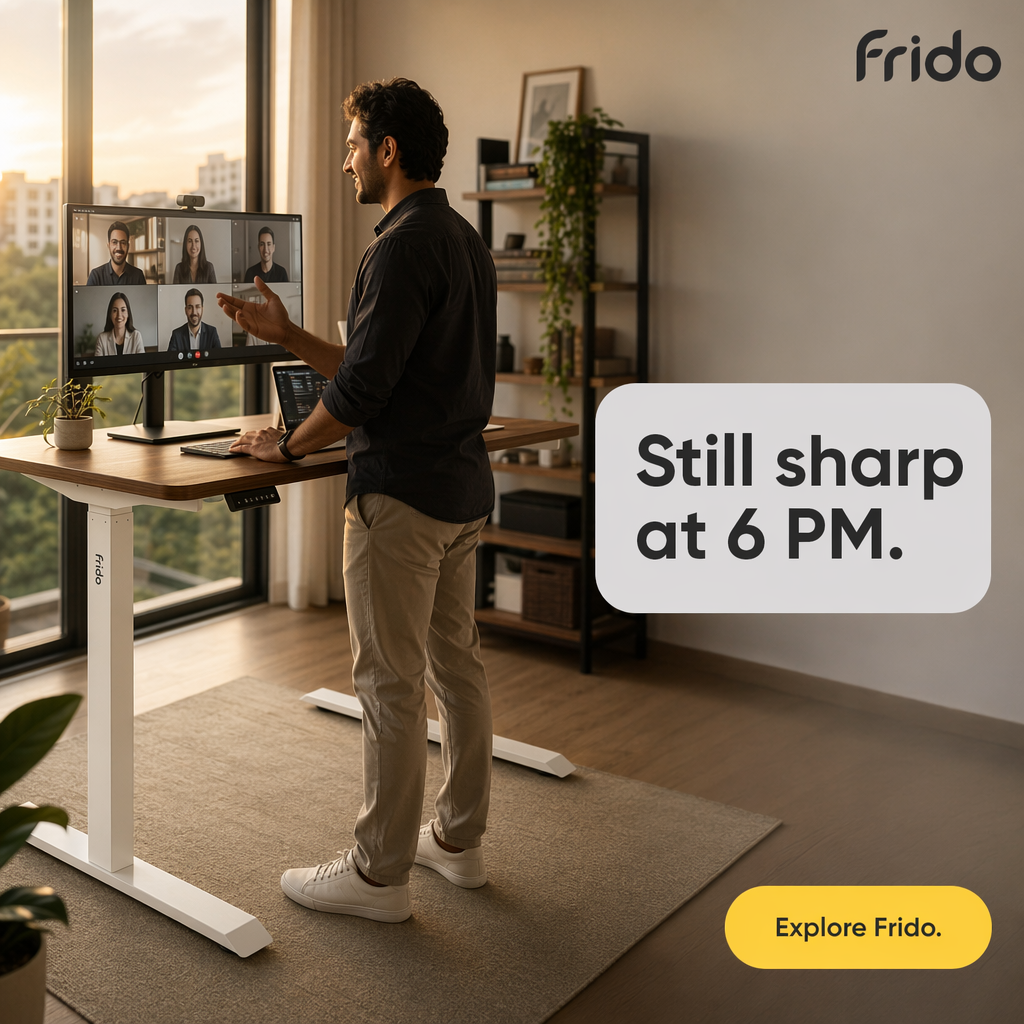
A real LocalAds static output for the comfort brand Frido. The audience branch is professionals, so the angle becomes staying sharp through the workday ("Still sharp at 6 PM") rather than generic back-pain messaging. The product, the home-office scene, and the brand tone all trace back to the page, not a prompt.
That product-accuracy point is easiest to see in a category where the ad has to look expensive. LocalAds keeps the actual product and palette intact while art-directing the scene around it, which is exactly what a beauty or personal-care brand needs. For more on that, see how we approach AI ad creatives for skincare and beauty brands.
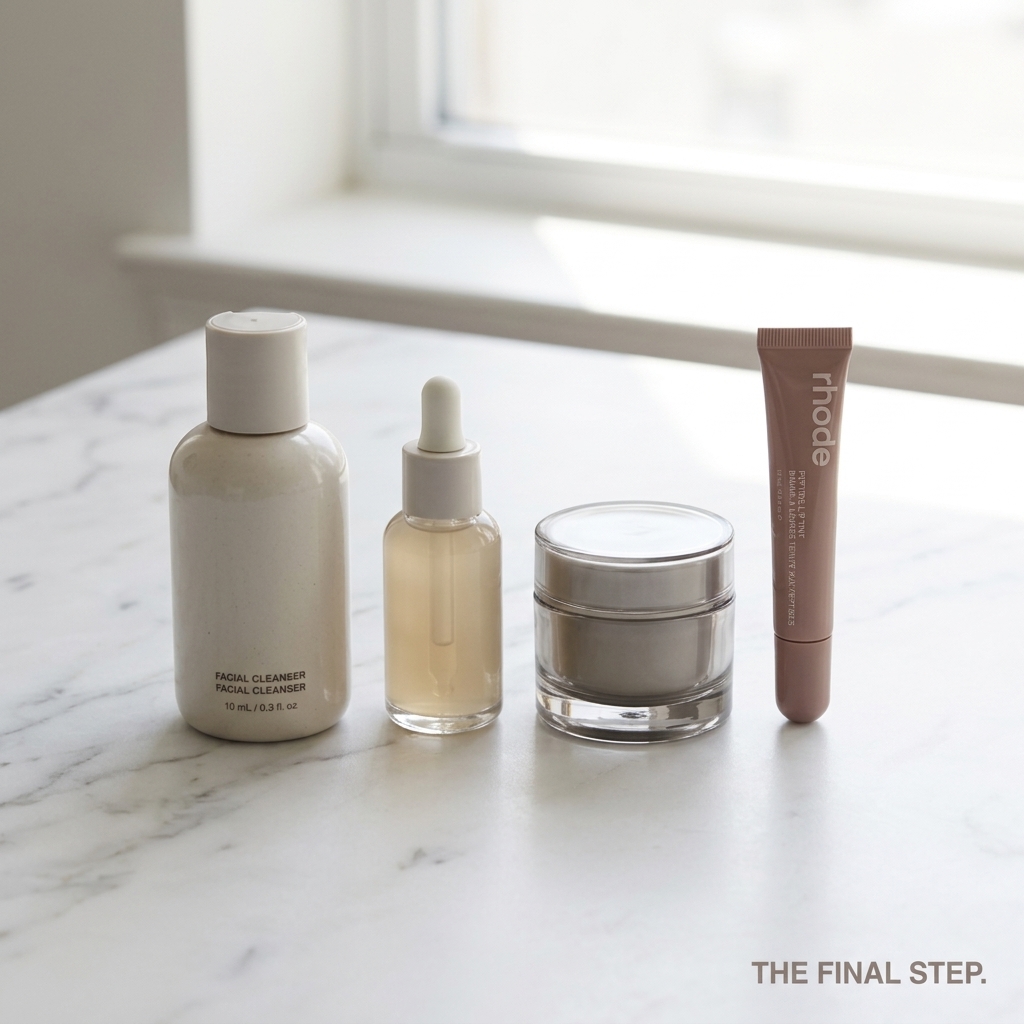
A real LocalAds static ad for Rhode. The Peptide Lip Tint sits at the end of the brand's cleanser, serum, and moisturizer on a marble counter, with the angle "the final step" positioning it as the close of the routine. Muted rose colorway and clean, minimal art direction are held consistent with the brand.
If you want the full walkthrough of how a page becomes a testing strategy, we break it down in generate ads from a product URL.
Feature and pricing comparison
Note on pricing: LocalAds figures are exact. Creatify's plans are credit-metered and change, so we describe them qualitatively rather than quote a number that may be stale. Check Creatify's current pricing page before you buy.
| Creatify | LocalAds | |
|---|---|---|
| Primary output | AI video ads | Static ad creatives + animate-to-video |
| Input | Product URL, script, or prompt | Product URL (no prompting) |
| UGC video | Yes, 1,500+ stock avatars, lip-sync | Yes, 30-second creator-led UGC generated per script, AI voiceover |
| Avatar roster to browse | Yes, 1,500+ | No, creator footage is generated per script |
| Animate-to-video | No | Yes, any static creative |
| Static feed ads | Limited | Core strength |
| Strategy tree (audience to angle to hook) | No | Yes |
| Product accuracy from page | Varies (video scenes) | Product, price, claims pulled from page |
| Product photography | No | Yes, from URL |
| Amazon listing images | No | Yes, 9 per ASIN |
| Sizing | Short-video formats | Meta, TikTok, Pinterest, YouTube |
| Free trial | Limited trial | 3 days, card required |
| Entry pricing | Credit-metered monthly plans (video renders consume credits) | Starter $149/mo (~150 creatives) |
| Higher tier | Higher video-credit tiers | Pro $299/mo (~400 creatives) |
| Amazon add-on | Not applicable | $10/ASIN one-time (2-ASIN minimum) |
The pattern is clear. Creatify prices around video renders, which are heavier, so per-asset economics reflect that. LocalAds prices around static creatives at roughly one credit each, which is why Starter covers about 150 distinct creatives and Pro about 400. Different formats, different unit economics.
Which should you use
Match the tool to the job rather than looking for a single winner.
- Test video and want UGC-style avatars? Use Creatify. It is the avatar specialist, and LocalAds does not make spokesperson content. (If you are pricing the avatar category, see our Arcads pricing breakdown too.)
- Need on-brand, product-accurate static creative at volume? Use LocalAds. The strategy tree and page-derived accuracy are the point.
- Selling physical products where the shot has to be exactly right? LocalAds, especially if you also need photography or Amazon listing images from the same URL.
- Running a full-funnel program? Many teams honestly need both: Creatify for the video slots, LocalAds for the static feed and marketplace assets. They are complements more often than rivals.
If your reason for looking at Creatify was really "I need a Creatify alternative for static ads," that is precisely the gap LocalAds fills. A video engine is not the tool for a static, on-brand testing spread. Going from product URL to static ad with the strategy baked in is a different discipline.
Where LocalAds fits
LocalAds is not trying to be a video tool, and it will not pretend otherwise. It takes the same product URL a video tool would ingest and turns it into a spread of distinct, on-brand static creatives, each tied to a real audience and angle, plus the product photography and Amazon images most video tools do not touch.
For a static-led paid social program, that is usually the higher-leverage layer, because static isolates the angle cheaply and tells you what to say before you spend on video around it. Then, if video is part of your mix, a tool like Creatify handles that slot.
FAQ
Does LocalAds make video ads? Yes, in three forms. LocalAds generates static ad creatives from a product URL, animates any of them into short video ads, and produces 30-second creator-led UGC video ads with AI voiceover from the same workspace. What it does not have is a browsable roster of named stock avatars to lip-sync a script to, which is Creatify's model. If picking a specific presenter from a library is a hard requirement, that is the reason to use Creatify.
Is Creatify or LocalAds better for a physical-product D2C brand? It depends on format. For product-accurate static feed ads, Amazon images, and photography from your page, LocalAds is the stronger fit. For short-form spokesperson video and UGC-style avatar content, Creatify is built for that. Plenty of physical-product brands run both.
What is the real difference between AI video ads and AI static ads? Video ads (Creatify's output) use motion, voiceover, and often an avatar to tell a short story, which suits TikTok and Reels. Static ads (LocalAds's output) hold the whole argument in one frame with product, headline, and angle, which makes them cheaper and faster to test and easier to read in your reporting.
Can I really go from a product URL to a static ad with no prompting? Yes. LocalAds reads the page (product, price, claims, brand tone), builds a strategy tree of audiences, angles, and hooks, and renders static creatives bound to each, without a prompt box. The URL is the brief, so you are not compressing your product into a sentence for a model to guess from.
How much does each cost? LocalAds is exact: Starter at $149/mo for about 150 creatives, Pro at $299/mo for about 400, Amazon at $10 per ASIN (two-ASIN minimum), and a 3-day free trial (card required). Creatify uses credit-metered monthly plans where video renders consume credits, so check its current pricing page, as plans change.
The takeaway
Creatify and LocalAds are not really competitors so much as two halves of a creative stack. Creatify is the video specialist: 1,500-plus avatars, lip-sync, and short-form video from a URL. LocalAds is the static specialist: product-accurate, strategy-led creative from the same URL, plus photography and Amazon images. They overlap on the URL you paste in and diverge on everything after.
If your gap is static, on-brand creative that maps to real audiences and stays true to the product, paste a product page into LocalAds and see the spread one URL produces. If your gap is video, use Creatify, and let each tool do the job it is built for.
Related reading: