On this page
The short answer. A micro-drama ad is a 30 to 45 second vertical video told like an episode of a short TV drama: real-looking actors, quick cuts, spoken dialogue and a conflict that starts in the first second. The product does not appear as a pitch. It appears at the turning point, as the thing that changes how the scene ends. Brands use the format because it borrows the cliffhanger mechanics that turned vertical drama apps into a billion-dollar category, and because viewers watch a story to the end in a way they rarely watch an ad.
This guide covers the structure that makes the format work, a beat-by-beat template you can reuse, where TikTok's new brand tools for mini dramas fit, and a real example rendered by LocalAds.
Why micro-dramas suddenly matter to advertisers
Vertical short dramas, the one-to-two-minute episodes sold through apps like ReelShort and DramaBox, grew from a curiosity into a real business. US microdramas earned an estimated $1.3 billion from direct viewer payments in 2025, according to a Business Insider estimate cited by MediaPost.
Platforms followed the attention. On 30 June 2026 TikTok opened Mini Dramas to brands, letting them publish episodic promotional content through two hubs (Minis Center and Drama Center), and launched Growth Max, an ad product for promoting branded microdramas. TikTok says early Growth Max tests drove a 52% increase in incremental audience reach beyond off-platform campaigns (MediaPost). That is TikTok's own figure from its own tests, so treat it as a claim rather than a benchmark.
Brands moved too. Marc Jacobs, MCoBeauty and Bilt each released branded microdramas in the year to May 2026, each pulling millions of views, according to Ad Age.
You do not need a full episodic series to use the idea. A single 40-second micro-drama ad running in the normal feed uses the same hook, the same escalation and the same payoff, and it is far cheaper to test.
What a micro-drama ad looks like
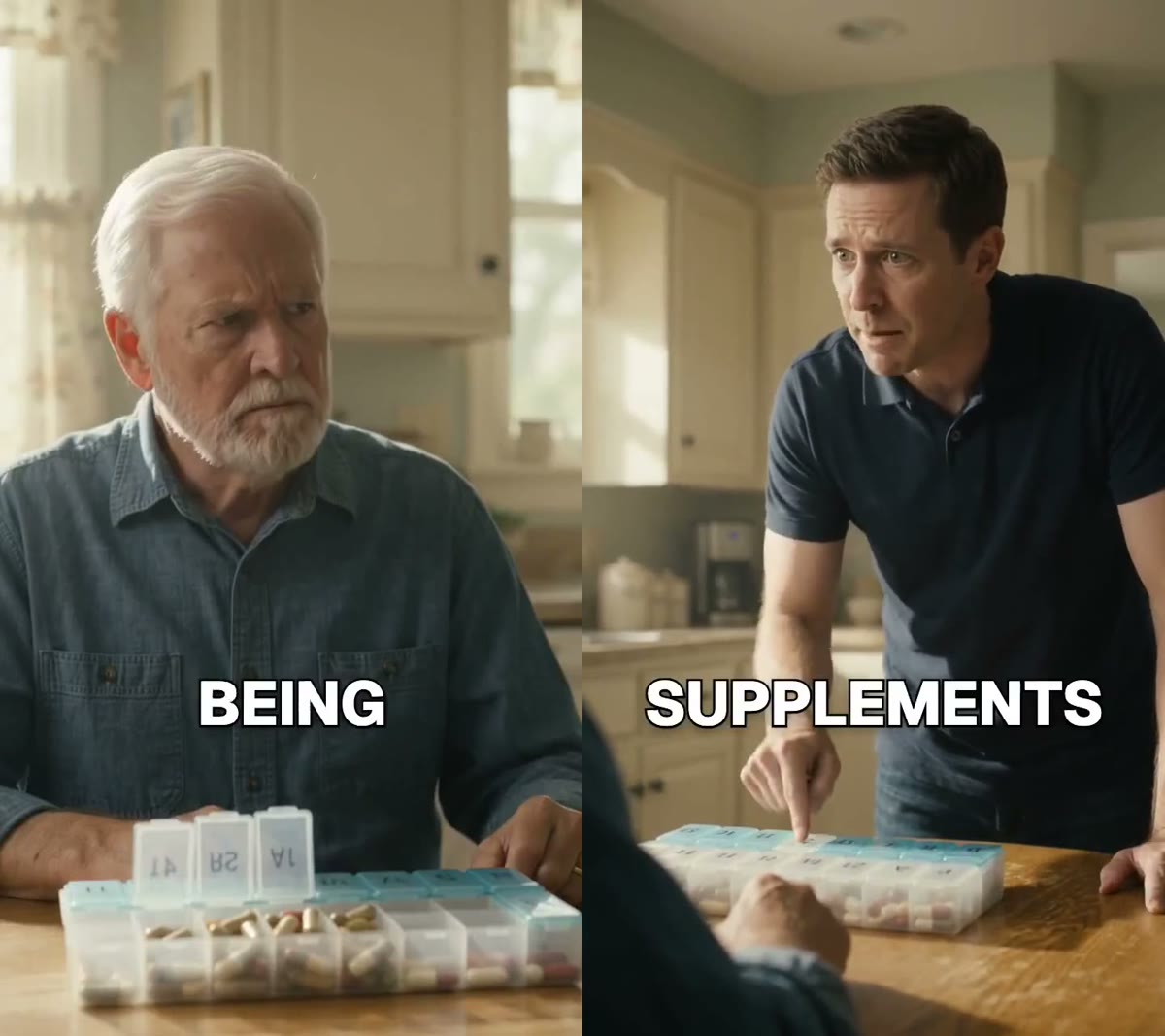
Here is a micro-drama ad LocalAds made for a copper water bottle, from nothing more than the product page and an audience. The loop below is four seconds of a roughly 40-second ad.
Two characters, one kitchen, a fight already in progress. Notice there is no product on screen yet. In a micro-drama the product earns its entrance.
The two shots that open it show the grammar of the format: a close-up of one character, then a cut to the other's reaction. Every line is dialogue between characters. There is no narrator explaining the product.
The five beats of a micro-drama ad
A micro-drama ad breaks into five beats. The timings below are for a 40-second ad.
| Beat | Time | What happens | Common mistake |
|---|---|---|---|
| 1. Cold open | 0 to 2s | A sharp line, an accusation or a shock, spoken in the first second | Opening on scenery, a logo or a character walking into frame |
| 2. Roles | 2 to 8s | Two to four characters with clear roles: the underdog, the doubter, the witness | Too many characters, or roles the viewer has to work out |
| 3. Escalation | 8 to 25s | The pressure on the hero rises in every scene | A flat middle where people just talk about the problem |
| 4. The turn | 25 to 33s | The product changes the moment, shown in a clear close-up | Showing the product early, which kills the tension |
| 5. Payoff | 33 to 40s | The doubters react, and the product is named the way a person would say it | A voiceover pitch or a feature list at the end |
Three rules sit on top of the beats:
- One or two places. Keep the drama in a kitchen, an office or a car, described the same way in every scene. Location changes cost the viewer attention and, in AI video, consistency.
- Cut inside scenes. A line, then the listener's reaction. Up to three quick cuts inside a scene is what makes it feel like television rather than a slideshow.
- No on-screen text beyond subtitles. The drama has to carry itself. Headlines and price stickers break the fiction.
Story shapes that work for brands
The format rewards familiar storylines, because the viewer has to understand the situation in two seconds. These five come up again and again:
| Story shape | The underdog | The doubter | How the product turns it |
|---|---|---|---|
| The stubborn parent | An adult child | A parent set in their ways | The product proves the child right, gently |
| The office humiliation | A junior employee | A dismissive boss | The product makes them look prepared |
| The ex returns | Someone recently dumped | The ex, or the ex's friends | The product is part of the glow-up |
| The family dinner | The partner who cooks | A critical in-law | The product saves the meal |
| The first date | A nervous dater | Their own insecurity | The product removes the thing they were hiding |
Pick the shape that matches the job your product does. The copper bottle ad above uses the stubborn parent because the product's audience is people worried about a parent's daily habits, not the parent.
Micro-drama vs other story formats
Micro-drama is one of five story formats, and it is not always the right one. If your product has a visible result, a before and after is faster. If your brand has a sense of humour, found footage can hit harder in less time.
The same product as found footage: a made-up 1980s local TV show. Same audience as the micro-drama, completely different emotional register.
| Format | Length | Strength | Pick it when |
|---|---|---|---|
| Micro-drama | 30 to 45s | Emotional hold, watch-to-end | The purchase is emotional: confidence, family, status |
| Found footage | 30 to 45s | Curiosity, does not look like an ad | You can afford to be playful |
| Before / after | 30 to 45s | Proof | The result is visible |
| Absurd hook | 15 to 30s | First-second stop rate | Impulse buys and crowded categories |
| Podcast-style | 30 to 45s | Credibility through conversation | The product needs an argument, not a scene |
The same idea also carries across formats. The podcast-style ad for this product turns the pill-organiser argument into a conversation between two hosts:
The full list of twenty formats, with an example of each, is in video ad formats that work in 2026.
What makes AI micro-dramas hard, and how to fix it
Micro-drama is one of the hardest formats for AI video, because it needs several believable people talking to each other across many shots. Three problems come up constantly:
- Faces change between shots. If each shot is generated from a fresh description, the son in scene four is not the son from scene one. The fix is to generate each character once, as a reference, and hold that face in every scene. LocalAds draws the cast first and keeps each face and each voice for the whole ad.
- The video model refuses the scene. Many models block realistic depictions of real people, news footage and certain health situations. A micro-drama script has to be written around those limits before rendering, or you pay for scenes that never arrive. Keep every character fictional, and never use a real person, brand or professional title.
- Claims creep in. Drama tempts writers into "this cured my dad" territory. Keep health claims to what the product facts actually support. For supplements and health products, our supplement creative guide covers where the claim lines are.
And one disclosure point: a micro-drama is clearly fiction, but it uses photorealistic people. Platforms label or require disclosure for realistic AI-generated people in ads, so check Meta's AI labelling approach and TikTok's rules before launch.
How to make a micro-drama ad without writing prompts
In LocalAds the flow is five choices, none of them a prompt:
- Audience. Pick who the ad is for. Audiences are written from your product page, so "adults worried about an ageing parent's habits" is already there.
- Format. Pick Micro-drama. Optionally choose the kind of story and how it ends; leave both on auto if you have no preference.
- Story. LocalAds writes three micro-drama stories for that audience, each with its opening conflict, its twist and how the product resolves it. Or type your own idea and it is kept.
- Script. Read every line and meet the cast. Change a word, or ask the director: "make the son less preachy, and let the dad have the last word".
- Video. Every scene is rendered with one face and one voice per character, plus music and subtitles, in 9:16. It costs 1 credit per finished second, so a 40-second micro-drama is 40 credits, and writing, casting and every change before rendering are free.
The ad can be written and voiced in any of 42 languages, which matters for a format whose biggest audiences are outside the US. Dialogue is written in the target language, not dubbed.
FAQ
What is a micro-drama ad? A micro-drama ad is a short vertical video ad, usually 30 to 45 seconds, told like an episode of a TV drama. It opens on a conflict in the first second, escalates quickly between two to four characters, and uses the product as the twist that resolves the scene.
How long should a micro-drama ad be? Between 30 and 45 seconds for a single ad in the feed. Shorter than 30 seconds and there is no room for escalation; longer than 45 and it competes with real drama episodes, which is a different product.
Are micro-dramas good for advertising? They are strongest for emotional purchases: confidence, family, relationships and status. They are weaker for products whose benefit is technical or visible, where a before and after or an explainer usually tests better.
What is TikTok Mini Dramas for brands? Announced on 30 June 2026, Mini Dramas lets brands publish short episodic promotional content in TikTok's Minis Center and Drama Center hubs, and Growth Max is an ad product for promoting branded microdramas. TikTok reports a 52% lift in incremental reach in early testing, which is its own figure.
Can AI make a micro-drama ad? Yes. The hard parts are keeping the same face and voice for each character across shots and writing scenes that video models will actually render. Tools that generate each character once and write the script around model refusals solve both.
Do I need actors or a set for a micro-drama ad? Not with AI video. The cast, the location and the voices are generated, and the product is shown from your own product photos. You still need a clear story, a real conflict and a product that genuinely resolves it.