On this page
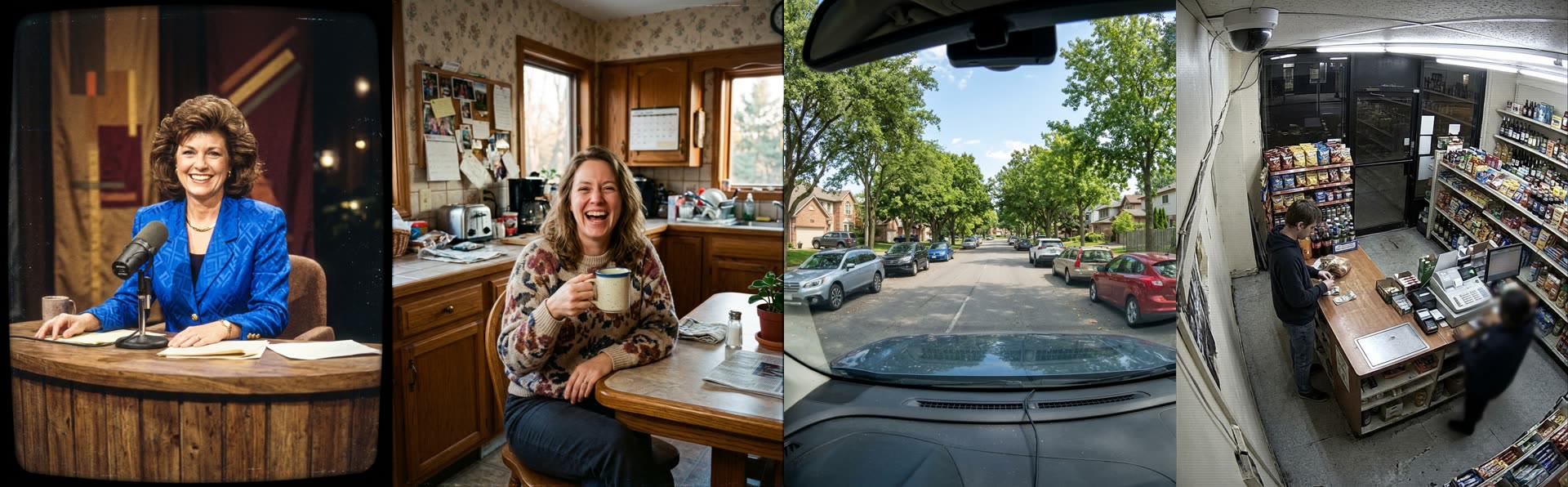
The short answer. A found-footage ad is a video ad that looks found rather than made: a clip from a 1980s local TV show on VHS, a 1990s home camcorder tape, a dashcam recording or a security camera high in a corner. It works because it does not look like an ad in the first second, and because these looks come with a built-in promise that something odd is about to happen. The format has one hard rule: it imitates a TV show or a home tape, never the news, and it says plainly that it is a dramatization.
Why found footage stops the scroll
Every viewer has seen thousands of polished ads and thousands of selfie videos. Grainy VHS colour, a timestamp in the corner or a fisheye view from the ceiling is neither, so the eye stops to work out what it is. Then the genre does the rest: home tapes and security clips are where funny, surprising things get caught, so the viewer waits for the moment.
Brands have used real footage this way for years. Coca-Cola's 2012 "Security Cameras" spot, built from surveillance clips of small kindnesses instead of crimes, was picked up as an ad of the day and ran during the Super Bowl the following year (The Drum). What has changed is cost: with AI video a brand can stage its own found footage for a few seconds of credit, with its own product in frame, instead of licensing real clips.
The four found-footage looks
| Look | What it imitates | The hook | Who tells the story |
|---|---|---|---|
| Retro TV show (VHS) | A 1980s local TV show about a light, funny "strange trend" in town | The host teases a mystery in the first sentence | A studio host, then a street host asking passers-by |
| Home camcorder | A 1990s home video of a friend or family member | The odd moment, mid-action, as if the camera was already rolling | The person filming, reacting off-camera |
| Dashcam | What a car's dashboard camera caught | Something funny or surprising outside the windshield | The people in the car, heard but never seen |
| Security camera | A fixed camera high in a corner | Someone doing something funny with the product | Someone off-screen, like a friend showing you the clip |
Here are the four looks as LocalAds renders them:
A real found-footage ad
This is the retro TV version, made by LocalAds for a copper water bottle from the product page and one audience (older adults switching away from plastic). The loop is four seconds of a roughly 40-second ad.
The host opens by teasing a mystery about something strange going on in town. In this look the segment then cuts to the street, where passers-by each name the product and one real benefit in their own words, before the studio host signs off with a small joke.
Look at the top of the frame: "Dramatization, AI-generated". A format that imitates real footage should always say what it is.
The rules that keep found footage honest
Found footage borrows the credibility of real footage, which is exactly why it needs rules.
- A TV show, never the news. No anchors, reporters, breaking banners or real events. A fake news clip is misleading, and platforms and video models both refuse it. A light local show about a "strange trend" gets the same nostalgic look without pretending to be journalism.
- Fictional people only. No real presenters, celebrities or public figures, and no real brands besides yours.
- Label it. Put "Dramatization" or "AI-generated" on screen. Meta labels ads with photorealistic AI-generated people (Meta), and TikTok requires realistic AI content to be labelled.
- Keep claims real. The street interviews can only say what the product page supports. "Testimonials" from fictional people that promise results are a fast route to a rejected ad, and in the US the FTC treats fake testimonials as deceptive.
When to use found footage, and when not to
| Use it when | Avoid it when |
|---|---|
| Your brand can be playful | Your category is serious: medical, financial, legal |
| The product has a funny or surprising moment in it | The product needs a careful explanation |
| You are fighting ad fatigue with polished creative | The audience is too young to recognise VHS or camcorder looks (the dashcam and security looks still work) |
| You want a story people share | You cannot label it clearly as a dramatization |
Found footage sits in the same family as two other formats that hide the ad inside something the viewer wants to finish. The absurd hook stages something impossible as if it were real:
And the micro-drama tells a short scripted story with a conflict in the first second:
The full story-format breakdown is in micro-drama ads, and all twenty formats are compared in video ad formats that work in 2026.
How to make a found-footage ad without a shoot
Real found footage means licensing clips or staging a convincing period shoot: period wardrobe, a VHS deck, a believable set. In LocalAds you pick who the ad is for and the Found Footage format, then the look (retro TV show, home camcorder, dashcam or security camera), or let it choose. It writes three stories for that audience in that look, then the script and the cast with their voices. You read every line, change any word or ask the director for a different ending, and it renders the finished 9:16 ad with music and subtitles at 1 credit per finished second.
FAQ
What is a found-footage ad? A video ad made to look like footage that was found rather than produced: a clip from an old TV show, a home video, a dashcam or a security camera. The product is part of the funny or surprising moment the footage "caught".
Are found-footage ads allowed on Meta and TikTok? Yes, as long as they do not imitate real news or real people, and as long as realistic AI-generated content is labelled where the platform requires it. Put "Dramatization" or "AI-generated" on screen.
Can AI make VHS or security camera style ads? Yes. AI video can render the grain, colour and framing of VHS, camcorder, dashcam and security footage. The hard part is the story: a single odd moment in the first two seconds, and a product that is genuinely part of it.
What kinds of products suit found-footage ads? Products with a funny, visual or surprising moment: snacks and drinks, pets, home gadgets, apparel, anything people use in public. Serious categories like medical or financial products are usually a poor fit.
How long should a found-footage ad be? Between 30 and 45 seconds for the retro TV show look, which needs a host, a street segment and a sign-off. Camcorder, dashcam and security looks can land in less, because they are built around one caught moment.