On this page
Search "best AI ad tools for beauty brands" and you get a wall of listicles that rank ten tools as if they all do the same job. They do not. A tool that writes ad copy, a tool that makes avatar videos, and a tool that turns your product page into finished creatives are three different purchases, and picking the wrong category is why marketers feel like AI ad tools underdeliver.
This is an honest, category-by-category guide for beauty and makeup brands specifically. We will map the real categories, say what each is genuinely good and bad at, and give you a way to choose based on what you actually need. Where LocalAds fits, we will say so plainly, and where it does not, we will point you elsewhere.
First, decide what you are actually buying
Before comparing tools, name the job. Beauty ad production has four distinct layers, and most tools only do one well:
- Copy: headlines, primary text, angles. (ChatGPT and copy tools.)
- Static creative: the finished image ad: product, layout, brand styling, copy baked in.
- Video creative: motion ads, from animating a static you already have to fully generated video.
- UGC-style video: creator-style talking or demo videos, either cast from an avatar roster or generated per script.
A beauty brand rarely needs all four from one tool, and no tool is best at all four. The right question is not "what's the best AI ad tool," it is "which layer is my bottleneck right now." For most performance-driven beauty brands, the bottleneck is layer 2: turning a product into a high volume of on-brand static creatives to test. That is worth remembering as you read roundups that treat everything as interchangeable.
Here is the landscape in one view before we go deeper:
| Tool category | What it does | Best for | Weak at |
|---|---|---|---|
| Copy generators (ChatGPT) | Headlines, primary text, angle ideas | Fast ideation of the language layer | Finished creatives; needs a compliance edit |
| Template/design (Canva, AdCreative) | Lays out assets you supply | Brand control, one-off designs | Volume; you still shoot and design |
| Avatar/UGC video (Arcads, Creatify) | Creator-style videos with AI avatars | Creator-style video at volume | Exact product and shade fidelity |
| URL-to-creative (LocalAds) | Static ads from a URL, animate-to-video, and 30-second creator-led UGC | High volume of accurate, launch-ready creative across all three formats, no shoot | Multi-scene brand films; no avatar roster to cast from |
The categories, honestly
Copy generators (ChatGPT and similar). Genuinely fast at the language layer: hooks, primary text, angle exploration. For beauty they need heavy prompting and a compliance edit, because they cheerfully write claims you cannot legally run. Great for ideation, useless for finished creatives. We cover how to prompt them for beauty in ChatGPT ad copy prompts for skincare brands.
Template and design tools (Canva-style, AdCreative-style). You bring the assets and the tool helps you lay them out, often with AI suggestions. Strong for brand control and one-off designs. Weak for volume and for the "shoot" itself: you still need product photography and you still do the design labor. Good if you have a designer and a photo library.
Avatar-roster UGC video tools (Arcads-style, Creatify-style). These let you pick a presenter from a library of stock AI avatars and lip-sync a script to them. Genuinely useful for one specific job: casting a recurring face, at volume, without a creator contract. For beauty they can struggle with exact product and shade fidelity, because the avatar is rendered separately from your actual packaging, and they are a video-only purchase. See Arcads alternatives and pricing and Creatify vs LocalAds for specifics.
URL-to-creative tools (LocalAds). You give a product URL and get finished, on-brand ads generated from your real page: static creatives (product, angle, layout, copy), animate-to-video versions of any of them, and 30-second creator-led UGC video ads with AI voiceover. Strongest for the layer-2 and layer-3 bottleneck at once, producing a high volume of accurate, launch-ready beauty creative without a shoot or a design pass. The reason this matters in beauty specifically: the packaging and shade come from the same product page for every format, so a lip oil looks like the same lip oil in a static, in an animated cut, and in a UGC video.
Two real examples of the URL-to-creative output for makeup brands, so the category is concrete rather than abstract:
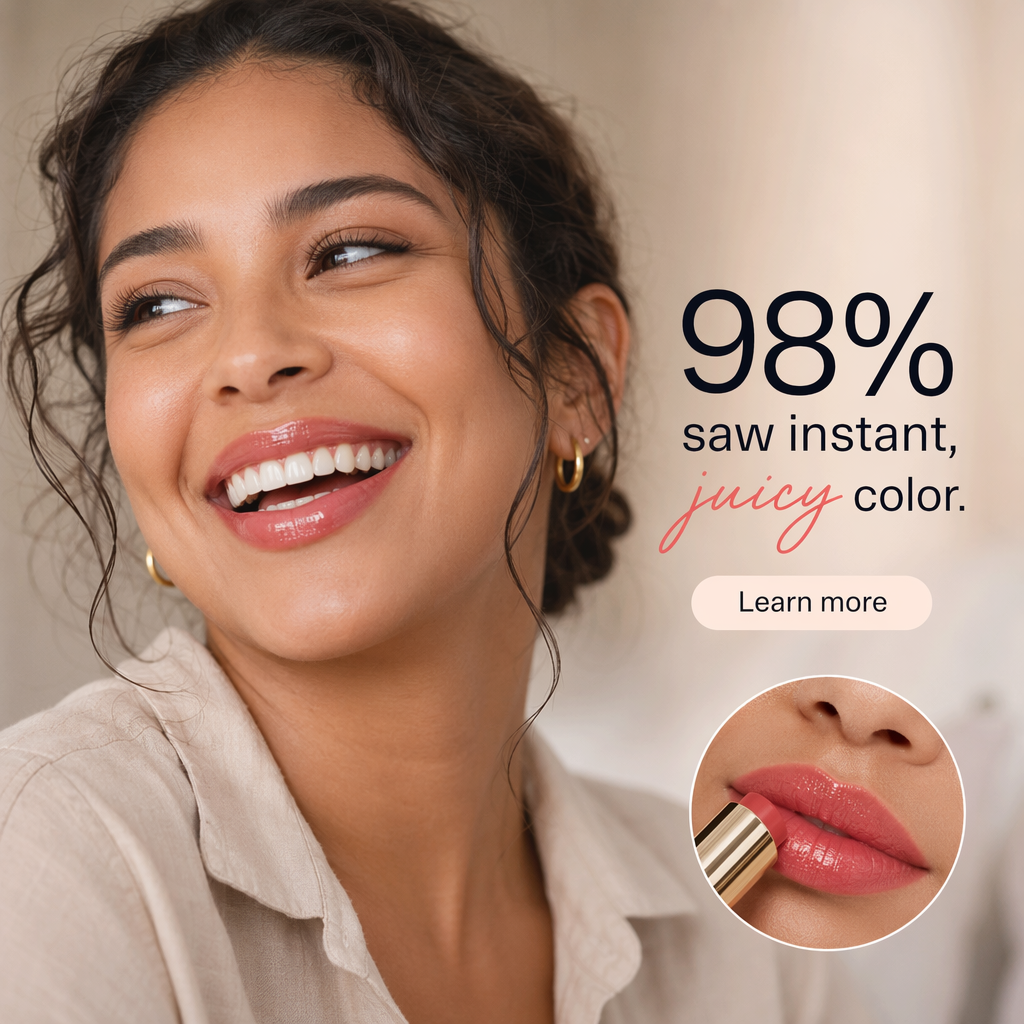
A real LocalAds output for a lip oil. One note that doubles as a buying tip: a stat like "98%" on a creative is a claim you must be able to substantiate. A good tool makes the visual; keeping the number honest is still your job, in beauty especially.
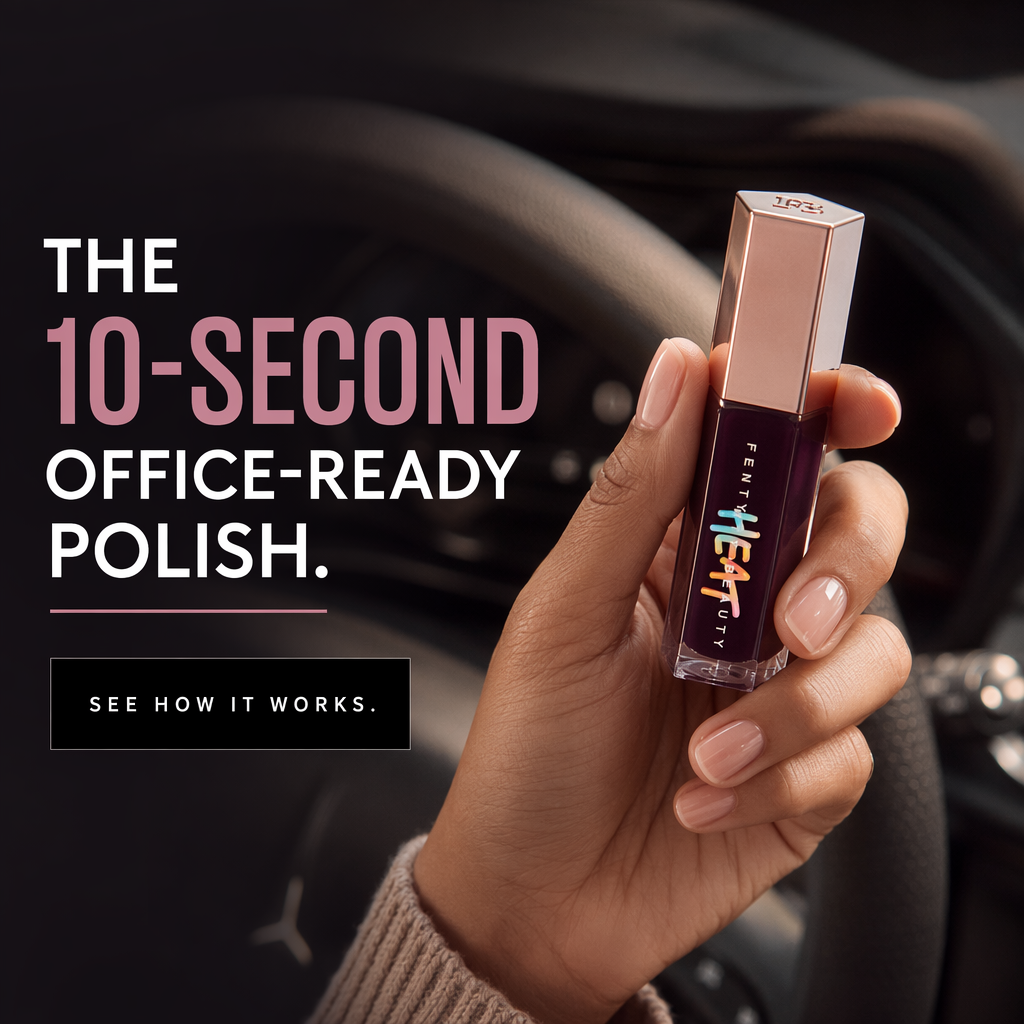
A real LocalAds output for a lip gloss. The angle (a fast, low-effort polish for a busy day) came from the product's job, and the lifestyle scene, product, and copy are one generated frame. This is the layer-2 output that most beauty brands are actually short on.
How to choose, in one pass
Match the tool category to your bottleneck:
- You have creatives but weak copy → a copy generator, prompted hard and compliance-checked.
- You have photography and a designer, need layouts → a template/design tool.
- Your bottleneck is casting a specific recurring presenter → an avatar-roster tool.
- Your bottleneck is video volume rather than casting → a URL-to-creative tool that generates UGC per script. See AI video ad creation for beauty brands for what each video format actually produces.
- You need a high volume of accurate, on-brand creative without a shoot → a URL-to-creative tool.
- You are a small team with no designer and a big catalog → URL-to-creative is usually the highest-leverage single purchase, because it collapses shoot, copy, and design into one input.
For most beauty brands one URL-to-creative tool now covers layers 2, 3 and 4, because static, animated video and creator-led UGC all come off the same product page and therefore keep the same packaging and shade. You add a second, avatar-roster tool only for the narrower job of casting a specific recurring face. We break the video side down, with real generated examples of both formats, in AI video ad creation for beauty brands.
What "trusted" means for a beauty brand specifically
Beauty raises the bar on two things most roundups ignore:
- Product and shade fidelity. Your packaging and color have to render accurately. Tools that reimagine your product from a text prompt drift; tools anchored to your real product page hold. For color cosmetics especially, review shade accuracy before shipping.
- Claim safety. Beauty is regulated. In the US, the FTC's health products compliance guidance governs how beauty and health claims must be substantiated, and Meta enforces its own advertising standards on top. A "trusted" tool for beauty is one whose output starts claim-safe, because it is built from your real page and approved claims, rather than one that invents "clinically proven" flags you then have to catch. This is why the compliance workflow matters as much as the image quality. See compliance-safe before-and-after skincare ads.
Those two are the difference between a tool that is impressive in a demo and one you can actually run a beauty brand on.
Where LocalAds fits
LocalAds is a URL-to-creative tool. You give it a product URL and it reads your page (product, ingredients, real claims, brand tone), builds a strategy tree of audiences, angles, and hooks, and renders each into a finished, on-brand static creative sized for Meta, TikTok, Pinterest, and YouTube. Because it is anchored to your actual page, the product stays accurate and the copy starts closer to what you can legally say. When you want motion, you can animate any creative into video from the same workspace, or generate a 30-second creator-led UGC ad with voiceover from the same product page. For a format-by-format walkthrough with real generated video, see AI video ad creation for beauty brands.
It is the right pick if your bottleneck is producing accurate, on-brand beauty creatives at volume, in both static and animated video form. Match the tool to the layer you are actually short on, which is the whole point of choosing by category instead of by listicle rank.
FAQ
What is the best AI ad tool for beauty brands? There is no single best, because ad production has four different layers (copy, static creative, video, UGC video) and no tool leads all four. Pick by your bottleneck. For most performance-driven beauty brands the bottleneck is producing on-brand static creatives at volume, which is what a URL-to-creative tool like LocalAds does; if your need is UGC video, an avatar/UGC tool fits better.
Which AI tools are trusted for beauty brand ads? Trust in beauty comes down to product and shade fidelity and claim safety. Favor tools that anchor to your real product page (so packaging and claims stay accurate) over tools that reimagine your product from a text prompt, and always keep a human compliance review because the category is regulated.
Do I need more than one AI ad tool? Often two: a URL-to-creative tool for the bulk of static and animated video creatives, plus an avatar/UGC tool when a campaign specifically needs creator-style video. One tool rarely does all four layers well.
Can AI ad tools handle makeup shade accuracy? Partially. Packaging and general look render well, but exact shade can drift, especially for color cosmetics. Review shade before shipping, and treat exact-color hero assets as the shots most likely to need a check or a real photo.
Are these tools compliant for beauty advertising? The tool does not make you compliant, your review does. But tools that build from your real claims start closer to claim-safe than tools that free-form generate copy and invent "proven" language. Compliance is a workflow, not a feature you can fully outsource.
The takeaway
Stop ranking AI ad tools as if they compete on one axis. They occupy four different layers, and the "best" one is whichever solves your actual bottleneck. For most beauty and makeup brands, that bottleneck is volume of accurate, on-brand, claim-safe creative, which is the URL-to-creative category. The useful news for beauty is that this category now covers all three output formats: static, animate-to-video, and 30-second creator-led UGC video, so shade and packaging fidelity can stay consistent across every format instead of drifting between tools.
If accurate beauty creatives at volume is your constraint, generate ads from your product URL and judge the output against the two examples above. Pick by category, review for shade and claims, and you will get more from one tool than most brands get from five.
Related reading: