On this page
Makeup is the hardest beauty category to fake and the easiest to sell, because color cosmetics live entirely on how they look. That makes AI ad creatives for makeup a real test: if the shade drifts or the gloss looks plastic, the ad is dead. When it works, though, you get scroll-stopping lip and color ads from a product URL, no shoot required.
This post shows real AI-generated creatives for makeup and lip brands, broken down by the angle each one runs, so you can see what the format actually produces. We will also be honest about the two things that still need you, shade accuracy and claim safety, because pretending they do not exist is how brands ship bad color ads.
Makeup creatives sell on angle, not just on product
The mistake most brands make with makeup ads is showing the product and stopping there. A lip gloss on a plain background is a catalog shot, not an ad. What makes a creative convert is the angle: the specific reason this product fits into someone's day. AI is good at generating a spread of angles from one product, which is exactly what you want for testing.
The angles worth generating for a lip or color product, and what each one sells:
| Angle | What it sells | Example headline |
|---|---|---|
| Product hero (with a reason) | The swap or upgrade | "Upgrade your daily lip balm." |
| Ingredient and texture | Formula story (vegan, hydrating, non-sticky) | "Vegan hydration meets wet-look shine." |
| Transformation | The immediate visible result | "Goodbye Dry Lips. Hello Polish." |
| Lifestyle and moment | Where it fits in the day | "The 10-second office-ready polish." |
| Social proof | Trust from other buyers | "98% saw instant, juicy color." |
One product URL can produce a version of every row above, which is the whole point: you test angles, not guesses.
Start with the product-hero angle done right. Even a hero shot needs a reason to care, and here the copy supplies it:
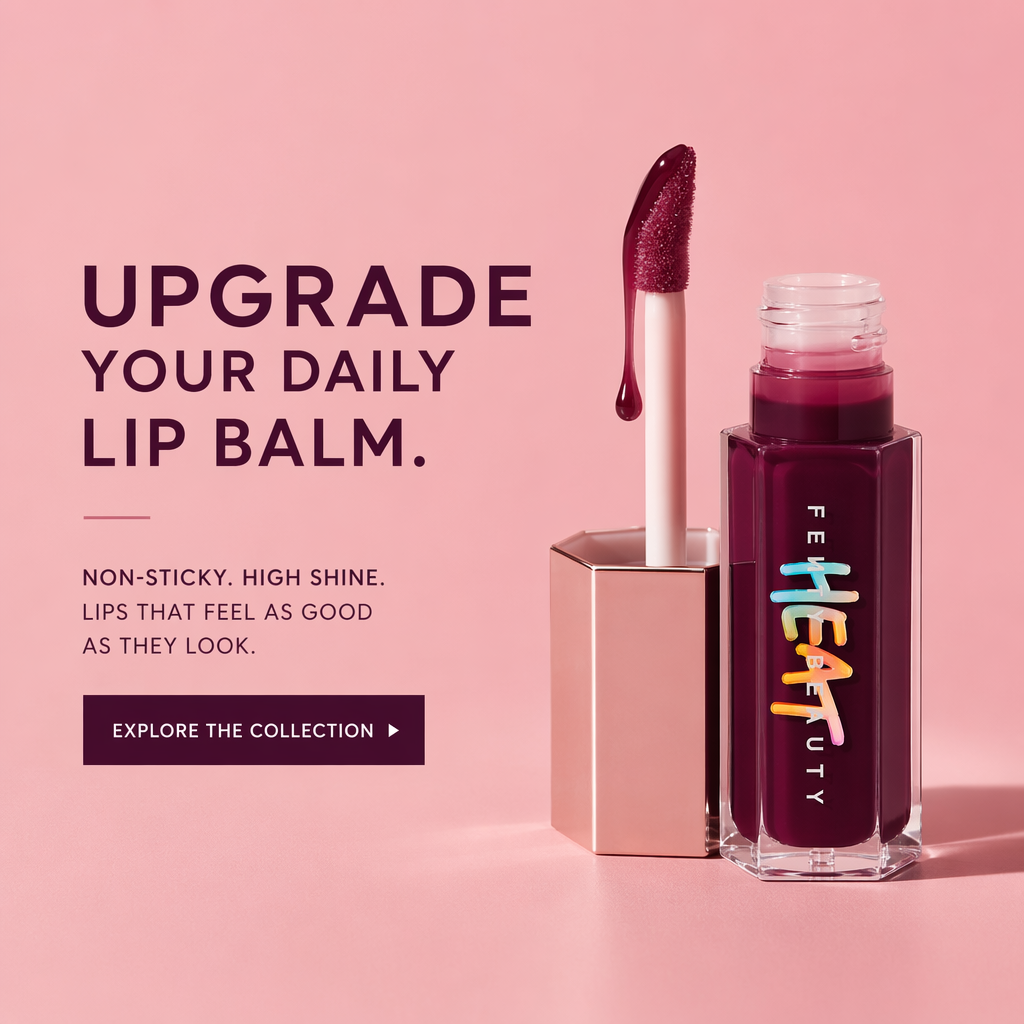
A real LocalAds output. The hero shot works because the angle is a swap ("upgrade your daily lip balm"), not just "here is a gloss." The wand and product render cleanly, the shine reads as shine, and the copy names the two objections a balm user has: sticky, and low shine.
The ingredient and texture angle
Color cosmetics increasingly sell on formula, not just shade: vegan, hydrating, non-sticky, clean. An ingredient-led creative pairs the product with visual proof of the formula story:
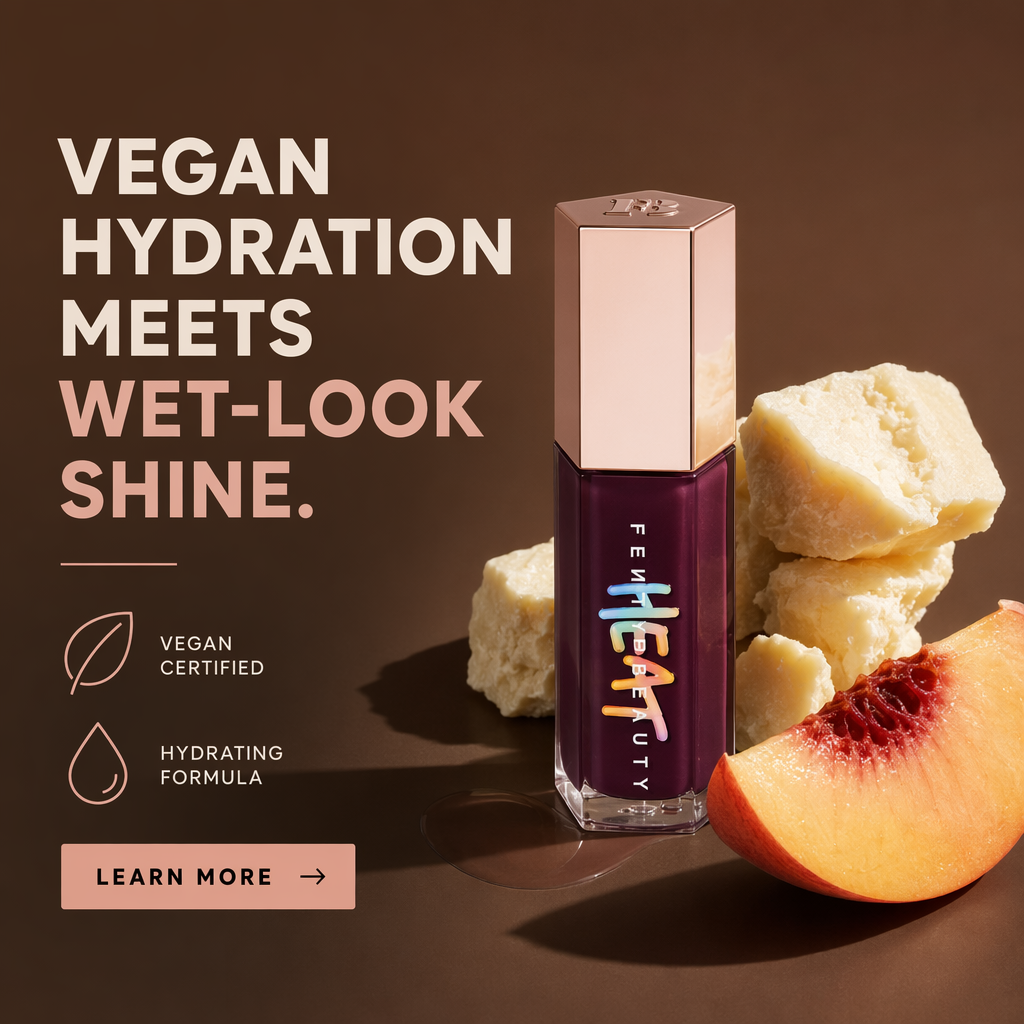
A real LocalAds output. The shea butter and peach do the ingredient storytelling, the icons make the claims scannable, and the "wet-look shine" line ties the formula benefit back to the visible result. This is a texture-and-ingredient ad that would normally need a styled shoot.
The transformation angle, done carefully
The before-and-after is powerful for makeup because the result is immediate and visible. It is also the angle that needs the most care, even for cosmetics. Here is one that leans into the visible payoff:
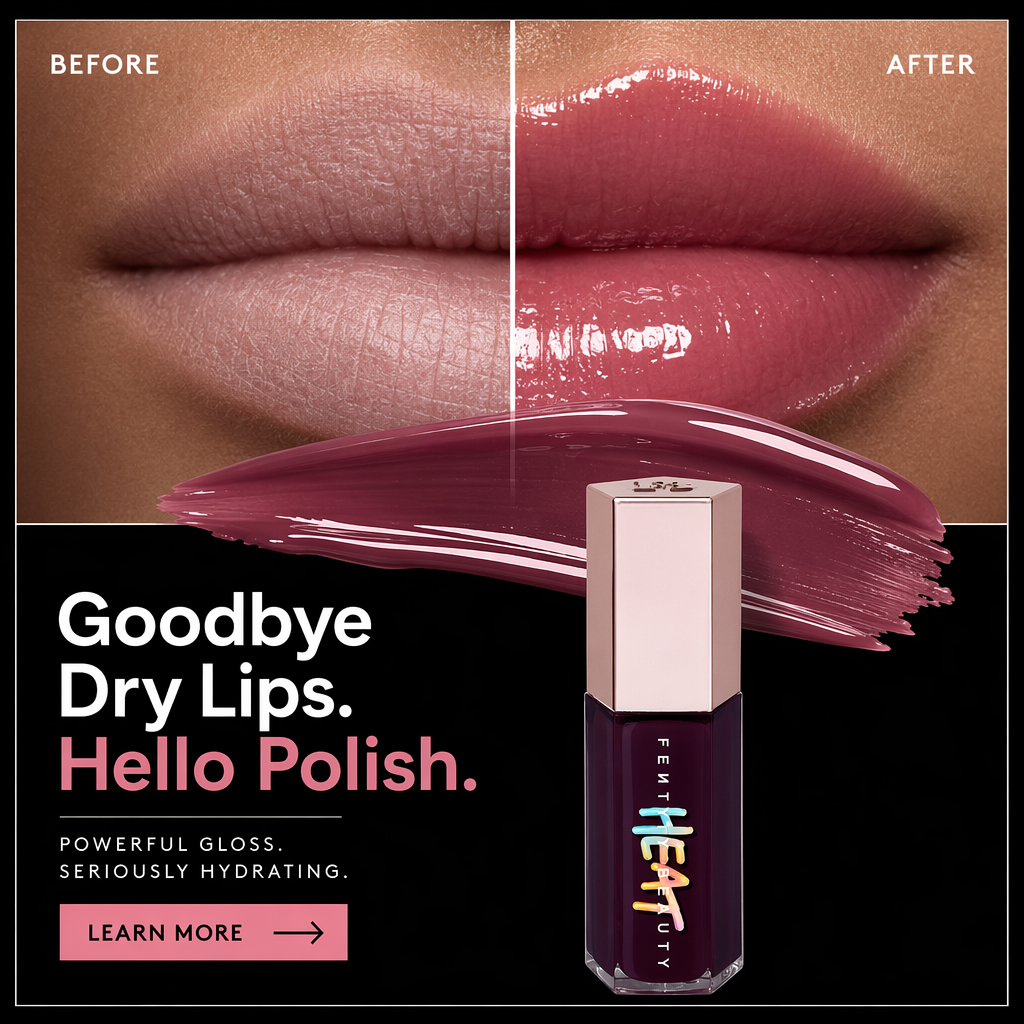
A real LocalAds output. For makeup, a before-and-after of an immediate cosmetic result (matte to glossy) is much lower risk than a skincare transformation claim, because it shows what the product visibly does rather than promising to change your skin. Even so, keep the result representative and the claims ("seriously hydrating") within what you can support.
A quick but important note: the compliance bar for makeup is lower than for skincare, because you are showing a cosmetic effect, not promising to treat a condition. The FDA's cosmetic-versus-drug line is exactly why: describing how a product looks and feels is a cosmetic claim you can make, but a physiological promise crosses into drug territory and needs real substantiation. Even so, the bar is not zero. "Plumps," "hydrating," and any percentage stat are still claims. The full framework is in compliance-safe before-and-after skincare ads, and most of it transfers to color cosmetics.
What AI gets right for makeup, and what still needs you
The honest breakdown, because color is unforgiving:
Gets right:
- Product and packaging rendering (tubes, wands, caps) at high fidelity.
- Gloss, shine, and wet-look finishes, which read convincingly.
- Lifestyle and prop staging (backgrounds, ingredients, scenes) that used to need a stylist.
- A spread of angles from one product, fast, for testing.
Still needs you:
- Exact shade accuracy. This is the big one for makeup. Generated color can drift a shade or two, which matters when customers buy on precise color. Review every shade against your real product before shipping, and treat exact-match hero assets as check-or-reshoot.
- Claim discipline. "Plumper," "long-wear," and any stat are claims. Keep them within your evidence.
- Skin and lip realism at extreme close-up. Mid shots render well; pore-level or ultra-close lip texture can show artifacts.
The rule for makeup: use AI for the volume of angles and scenes, and keep a tight human check on shade and claims. That combination gets you speed without shipping a wrong-color ad.
From one product URL to a full set of makeup ads
The reason these examples share a look is that they were not designed one at a time. They were generated from a product URL.
LocalAds reads your product page (the product, the shade, the formula claims, your brand tone) and builds a strategy tree of angles (hero, ingredient, transformation, lifestyle), then renders each into a finished, on-brand static creative sized for Meta, TikTok, Pinterest, and YouTube. Because it is anchored to your real page, the packaging stays accurate, and you review the one thing that matters most for makeup: shade. When a still is not enough, you can animate any of these into video from the same workspace, so a gloss swatch becomes a motion ad, or generate a 30-second creator-led UGC ad from the same product page. We go deeper on that in how to make AI beauty video ads without a studio.
For the copy layer that pairs with these visuals, see ChatGPT ad copy prompts for skincare brands (the prompting method transfers directly to makeup), and to compare tool categories, best AI ad tools for beauty brands.
FAQ
Can AI make good ad creatives for makeup brands? Yes, with one caveat. AI renders packaging, gloss, and lifestyle scenes convincingly and can generate a spread of angles fast, which is ideal for testing. The caveat is exact shade accuracy, which can drift, so every color must be reviewed against your real product before shipping.
How accurate is AI with makeup shades? Close but not guaranteed. General look and finish render well, but precise color can shift a shade, which matters for color cosmetics. Treat shade as the one thing you always verify, and use a real photo for hero assets where exact color is critical.
Are before-and-after makeup ads risky? Less risky than skincare, because a cosmetic result (matte to glossy) shows what the product visibly does rather than promising to change your skin. They are not risk-free: keep results representative and claims like "plumping" or "hydrating" within what you can support.
How do I get consistent makeup creatives across a whole range? Generate from your product pages rather than designing each ad separately, so packaging, shade, and brand style stay consistent by construction. A URL-to-creative workflow produces a matched set of angles per product, which is hard to achieve with one-off design.
Can I turn makeup creatives into video? Yes. Any static creative can be animated into video in the same workspace, so a gloss swatch or a hero shot becomes a short motion ad. One product URL can produce both your static and video makeup ads.
The takeaway
Makeup is the category where AI ad creatives are most impressive and most demanding, because color is unforgiving. Used well, it gives you hero, ingredient, transformation, and lifestyle angles from a single product URL, at a speed no styled shoot can match. Used carelessly, it ships a wrong-shade ad. The discipline is simple: let AI do the volume of angles and scenes, and keep a tight human check on shade and claims.
If you want to see a full set of makeup angles built from your own page, generate ads from your product URL and judge the shade for yourself. That review takes a minute; the shoot it replaces took a day.
Related reading: