On this page
Beauty is the hardest category to generate ads for, and the easiest one to tell when it has gone wrong. Shoppers know exactly what a Rhode tube or a Glossier pink looks like. Skin has to look like skin, not porcelain. And every claim on the creative (SPF, hyaluronic acid, heat protection) has to match what the label actually says, or you have a compliance problem on top of a trust problem.
That is why most AI-generated beauty ads fail in one of two ways: the product drifts (wrong cap, mushy label, color half a shade off) or the skin goes uncanny. Both are instantly visible to the exact audience you are paying to reach. This post shows what beauty creative looks like when those two problems are solved, using real generated ads for skincare, suncare, and haircare brands, and breaks down the angles that actually convert in this category.
The two non negotiables: real product, real skin
Beauty buyers comparison-shop visually. The product in your ad is being checked against the product in their bathroom, in the store, and in every other ad in their feed. So the bar is strict: the packaging must be photographically faithful, and any skin in frame has to read as genuinely human.
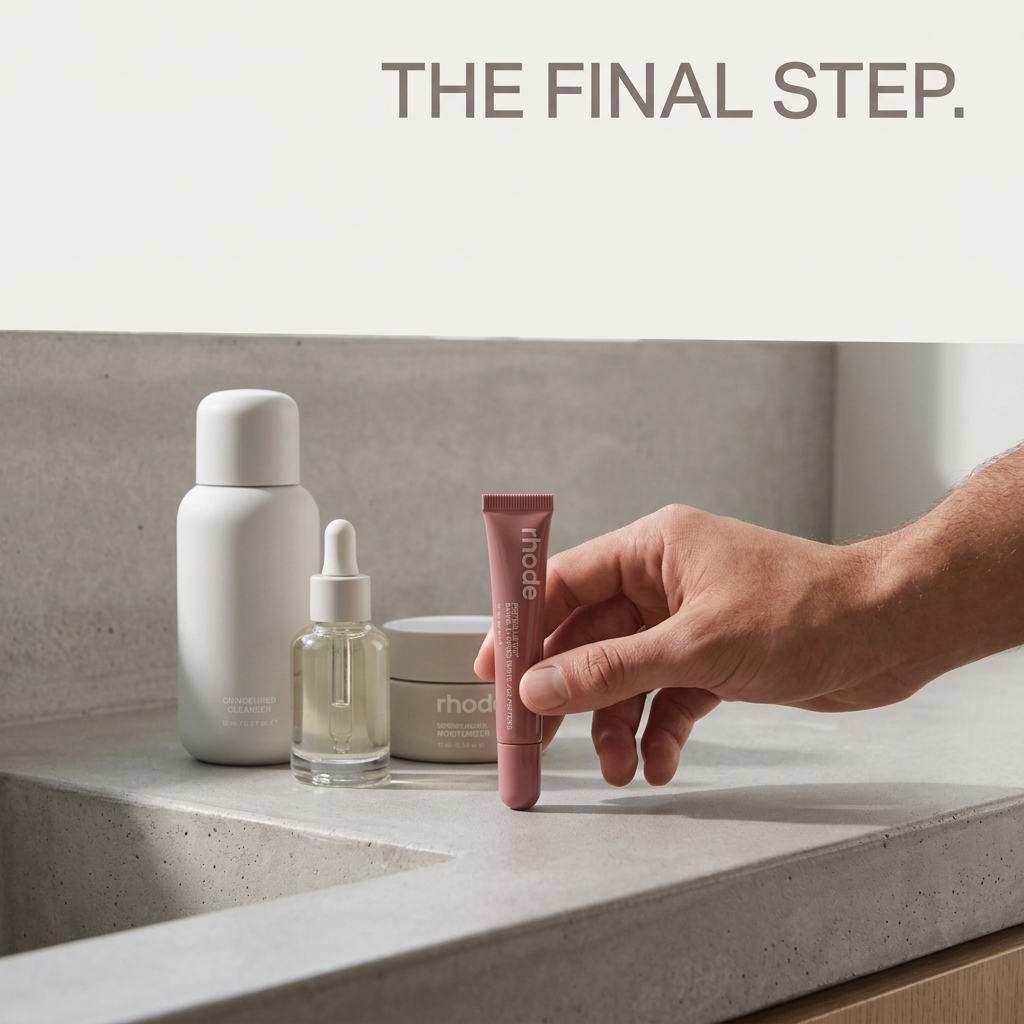
Generated for Rhode's Peptide Lip Tint from the product URL: the tube's shape, the muted rose colorway, and the brand's concrete-minimalism art direction are all preserved. The ad positions the tint as the last step of the routine it actually belongs to.
The skin test is just as important as the packaging test:
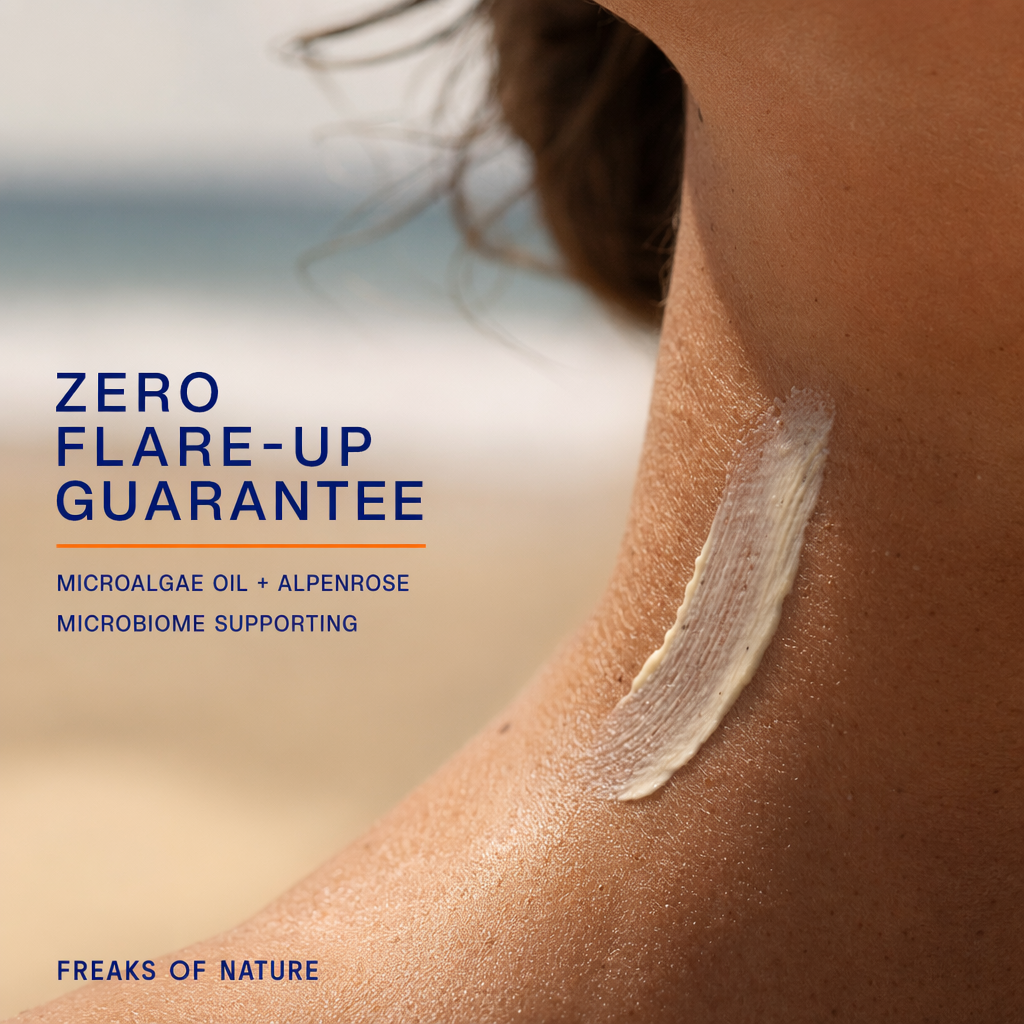
For the suncare brand Freaks of Nature: real-looking skin, golden-hour warmth, and a texture swipe (the classic beauty-editorial format), with the brand's actual microalgae and alpenrose ingredient story as the supporting copy.
The angles that convert in beauty
Beauty audiences have seen every "glow up" ad. What moves them in 2026 is specificity: a named problem, a quantified stake, a moment they recognize from their own day. These are strategy decisions, and they are where an AI tool either helps or just makes prettier wallpaper.
The cost-of-the-problem angle. Anchor the product against what the problem already costs:
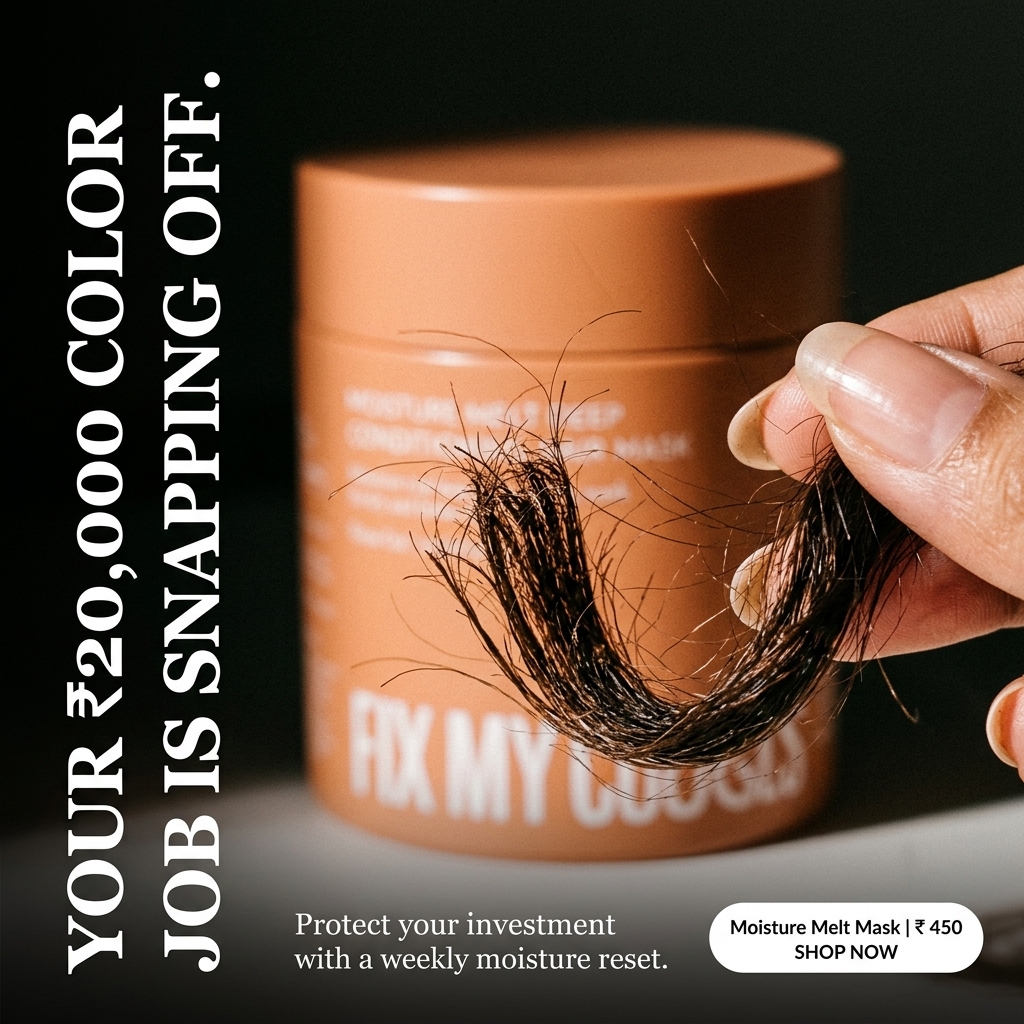
For Fix My Curls: the ₹450 mask is framed against the ₹20,000 color treatment it protects. The broken curl in frame is the hook; the price anchor is the angle.
The moment-in-the-day angle. Place the benefit inside a scene the buyer actually lives:
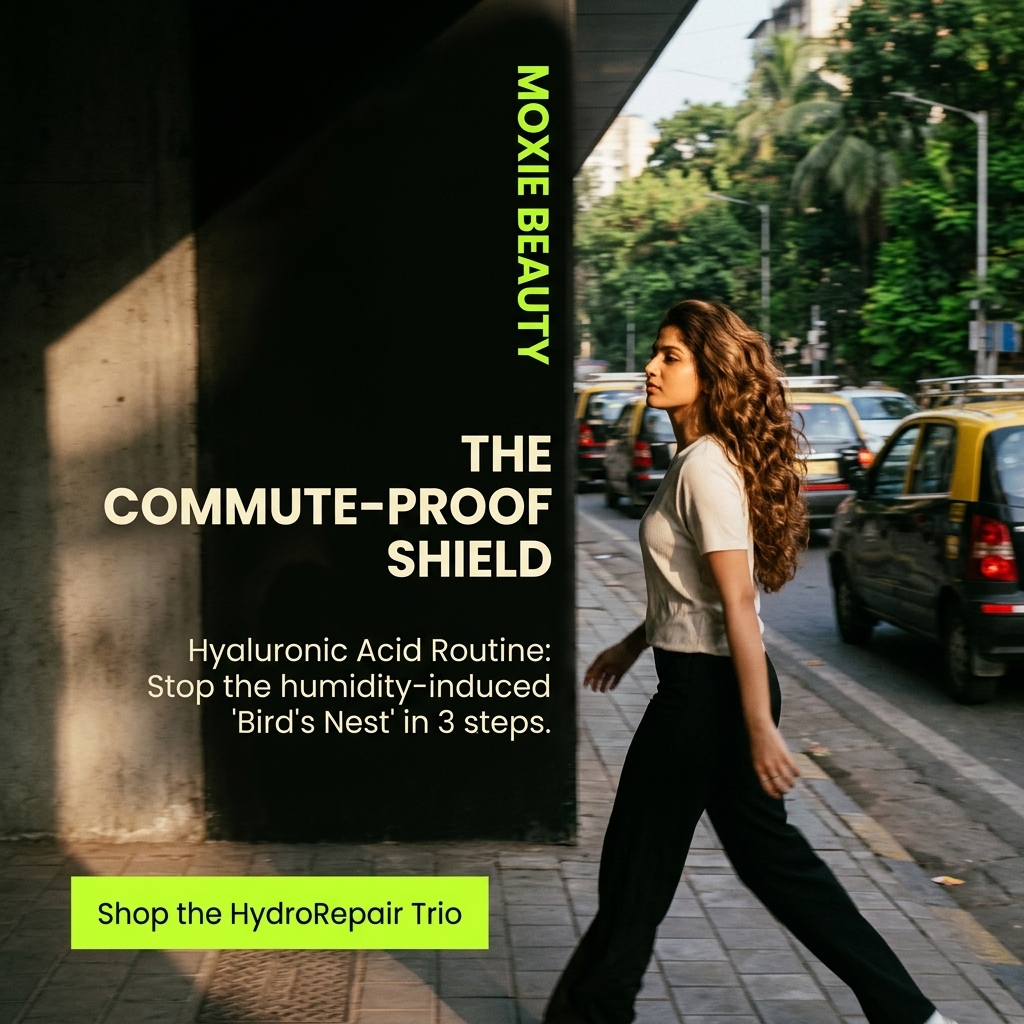
Moxie Beauty's HydroRepair routine sold as "the commute-proof shield": humidity, traffic, real city. And here is the same angle family pointed at a different audience, this time for Fix My Curls:
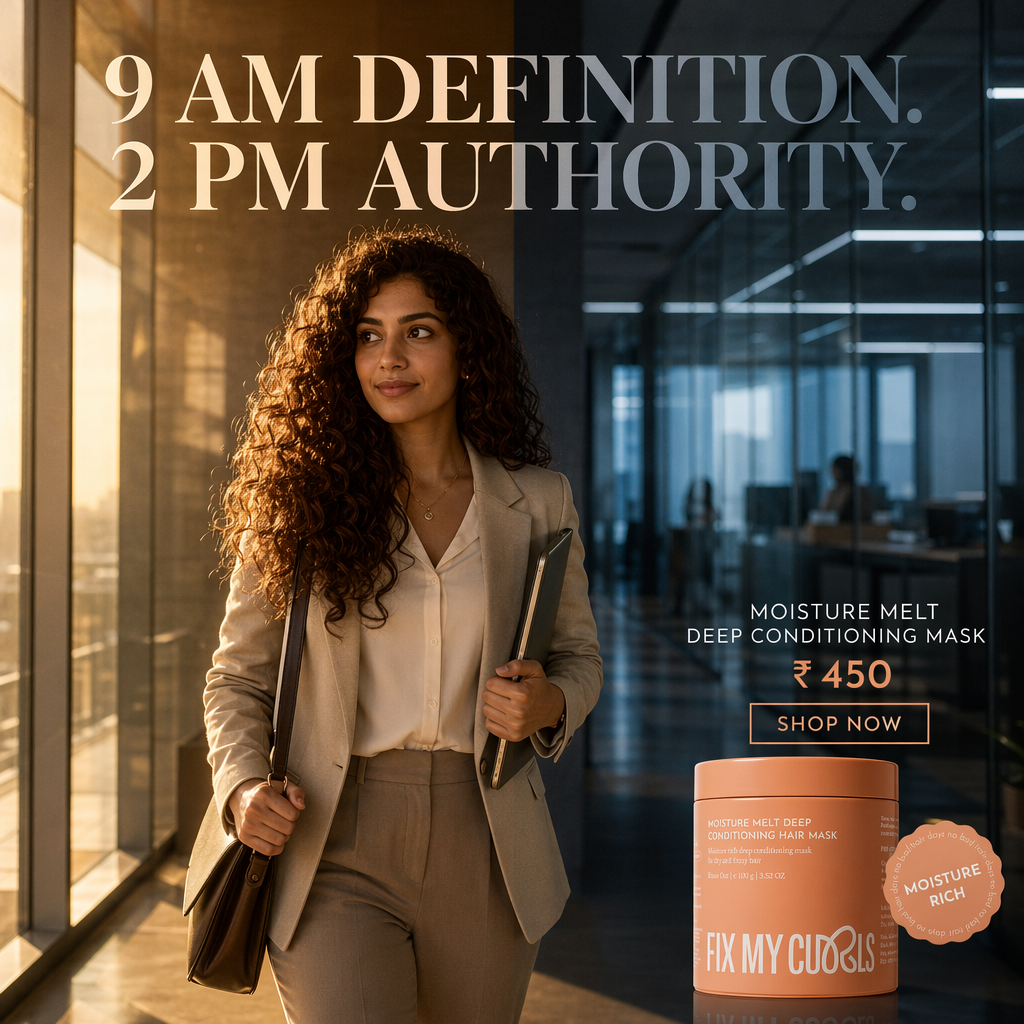
Same haircare category, different audience branch: office professionals get a definition-that-lasts angle with the price and CTA in frame.
The pattern across all four: the angle is doing the selling, the product stays photographically true, and the claims come from the label. That combination is what a strategy-first engine produces by default. Each ad maps to an audience-and-angle branch built from the product page, as described in Generate Ads From a Product URL.
A practical workflow for a beauty brand
- Paste the product URL. The engine reads the product, claims, ingredients, price, and brand tone. No prompt writing, no brand questionnaire.
- Review the strategy tree. Audiences (the commuter, the colorist client, the SPF-skeptic), each with angles and hooks pulled from what the page can actually support. Kill branches that do not match your positioning.
- Generate and test. Ship 10 to 20 distinct creatives per cycle across Meta and TikTok. Because each ad is tagged to an audience and angle, the test results read as strategy ("the cost-anchor angle wins for haircare") rather than aesthetics ("the orange one did well").
- Extend to the catalog. The same URL produces product photography like texture shots, shelf scenes, and on-skin swatches, plus Amazon listing images if you sell on marketplaces.
FAQ
Can AI generate ad creatives for skincare brands without distorting the packaging? Yes, if the engine starts from your real product rather than a text description. Every ad in this post kept the actual tube, jar, or stick photographically faithful and generated only the scene, copy, and layout around it. Prompt-based generators that redraw the product are the ones that produce mushy labels and off-color packaging.
Do AI beauty ads pass the "real skin" test? The current generation of models renders skin convincingly when the creative is built from a real product shot and a defined scene. The failure cases mostly come from text-only prompting. Always review on a phone screen at feed size, because that is where your audience judges it.
What ad angles work best for beauty and skincare? Specific ones: cost-of-the-problem anchors ("your color job is snapping off"), moment-in-the-day scenes ("commute-proof"), ingredient transparency, and routine positioning ("the final step"). Generic glow-up claims are saturated. The angle should come from your product page's actual claims so the ad stays compliant.
Is this compliant with ad platform rules for beauty? The creatives use the claims already on your product page (SPF values, ingredients, benefits) rather than inventing new ones, which is the main compliance risk with AI ad copy. You still review every ad before it runs, and the strategy tree makes it obvious which claim each ad leans on.
How much does it cost to generate beauty ad creatives with AI? With LocalAds, one credit is one creative: the Starter plan is $149/month for 150 creatives, and there is a 3-day free trial (card required) to see real output on your own product first. A full test cycle for one hero product typically uses 10 to 20 credits.
The takeaway
Beauty is the category where AI ad creative goes most visibly wrong, and the category where getting it right pays most, because creative is doing all the work in a feed full of lookalike glow ads. The bar: real packaging, real skin, and an angle specific enough to stop a thumb.
If you run a skincare, haircare, or beauty brand, paste your product page into LocalAds and look at the strategy tree it builds before judging the creatives. The angles are usually the part founders did not expect a tool to get right.
Related reading: