On this page
The direct answer: a genAI marketing agent for ad copy is a system that plans before it writes. Instead of completing your prompt the way a chatbot does, it works a pipeline: research the product, segment the audiences, choose an angle per audience, draft copy for each, and (in the best implementations) render that copy onto finished creatives. If a tool only does the drafting step, it is a copy generator wearing an agent costume. LocalAds runs an agentic pipeline of this kind, and this guide is honest about where the whole category still needs a human.
Chatbot, generator, agent: the distinction that matters
The word "agent" is applied to everything now, so here is a working test. Ask what happens between your input and the output:
| System | Your input | What happens in between | Output |
|---|---|---|---|
| Chatbot (ChatGPT) | A prompt you engineer | One completion | Text, quality tracks your prompt |
| Copy generator | Product name + template pick | Template filling | Text variants of one idea |
| Marketing agent | A product URL or brief | Research → audiences → angles → drafts → (render) | Many distinct ad concepts, reasoned |
The practical difference shows up in the second sentence of the output. A chatbot's ten variants are one idea rephrased ten times, because nothing upstream decided who the ad is for. An agent's variants differ at the strategy level: different audience, different pain, different claim. That upstream deciding is the entire value.
What an agentic pipeline actually produces
Concrete beats abstract. Below are outputs from an agentic run on Diet Coke, of all things, where the agent's research step surfaced an angle no template would find: repositioning a diet soda as the low-caffeine "3pm bridge" for focused professionals, against energy drinks.
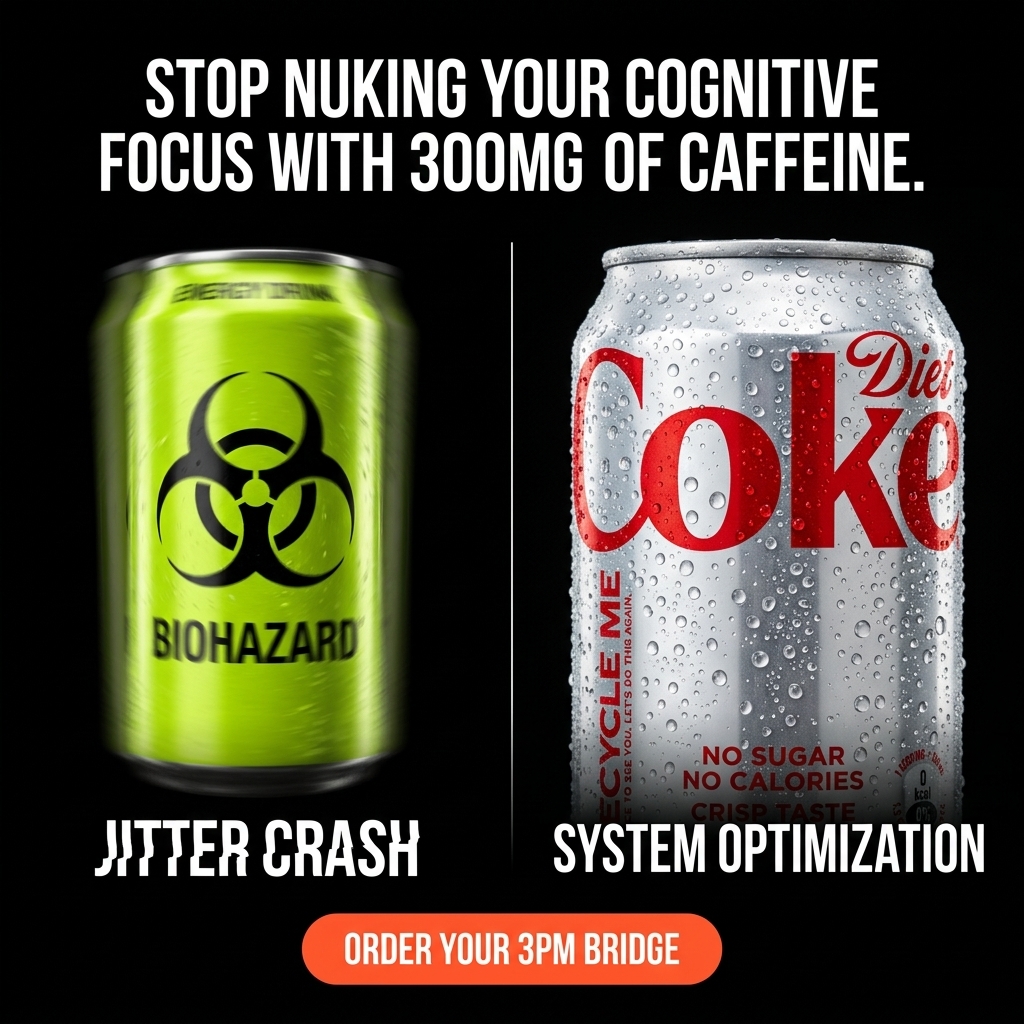
The contrast pattern, picked by strategy rather than by template: the agent framed the competitor category (high-stim energy drinks) as the problem and the product as the calibrated alternative. "Order your 3pm bridge" names a use-case, not a beverage. This is what angle-level variation looks like.
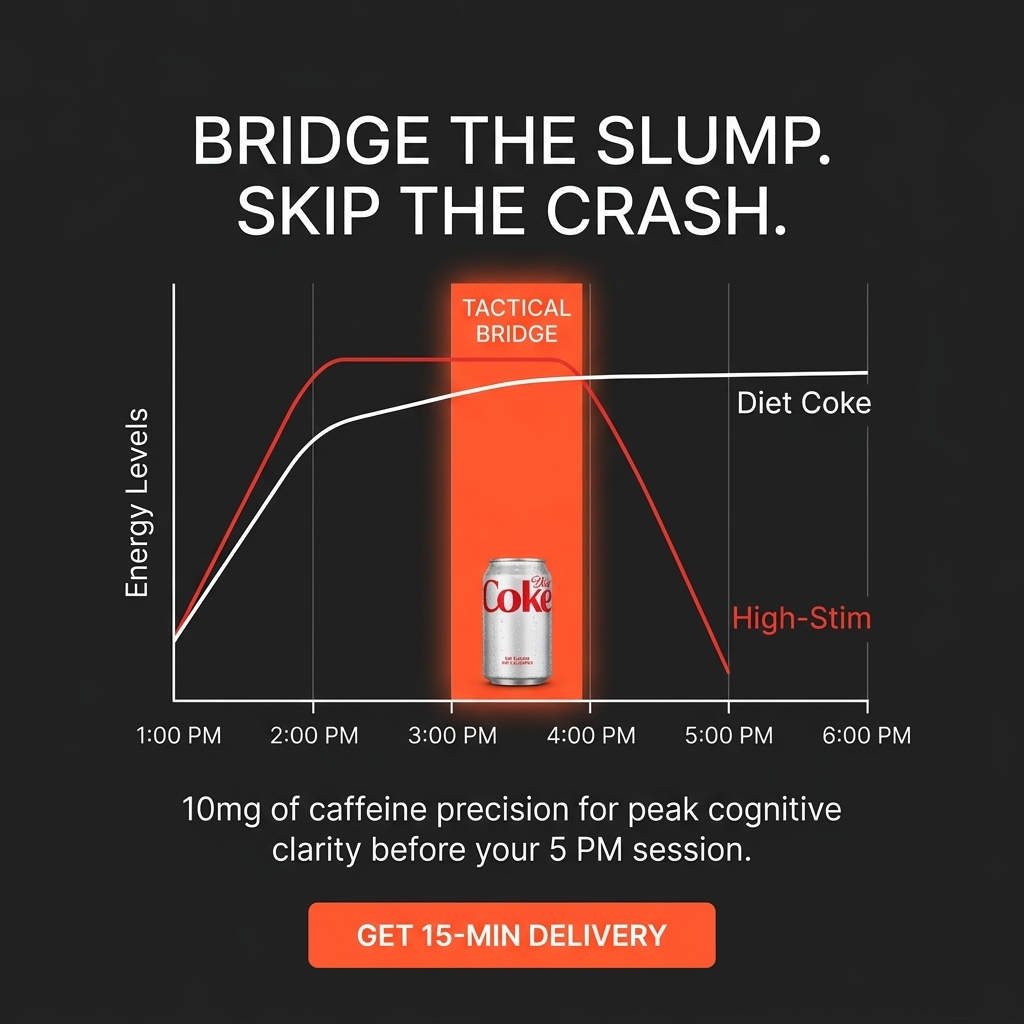
Same strategy, different execution: the claim as a chart. A copy generator cannot produce this because the visual argument IS the copy. When people ask what "agentic" buys you over a text box, it is this: the copy, the visual concept, and the layout came from one plan.
One honest note that doubles as a buying lesson: across a batch like this, individual claims can drift between variants (one of these runs quoted a different caffeine figure on a sibling creative than the can's actual 46mg). Agents multiply output, which multiplies your claim-checking surface. The FTC's substantiation rules do not care which software wrote the number.
Where agents genuinely beat prompting
Research grounding. Good agents read your actual product page, reviews, and claims before writing. The copy starts from what is true about the product rather than what is statistically plausible about products in general, which is where prompt-based copy quietly goes wrong.
Audience-angle coverage. An agent plans a matrix (audiences x pains x claims) and fills it. A human with ChatGPT explores the two or three angles they already believed in. The agent's boring-sounding coverage is what finds the winners nobody predicted; broad Meta campaigns then sort them.
Consistency at volume. Ten agent outputs share one strategy tree, so the batch reads like one brand ran it. Ten separate chat sessions do not.
The render step. Copy is not an ad. Agents that end at text hand you a design queue; agents that render produce something you can ship. Spec-led copy like this only becomes an ad when the layout does half the persuading:
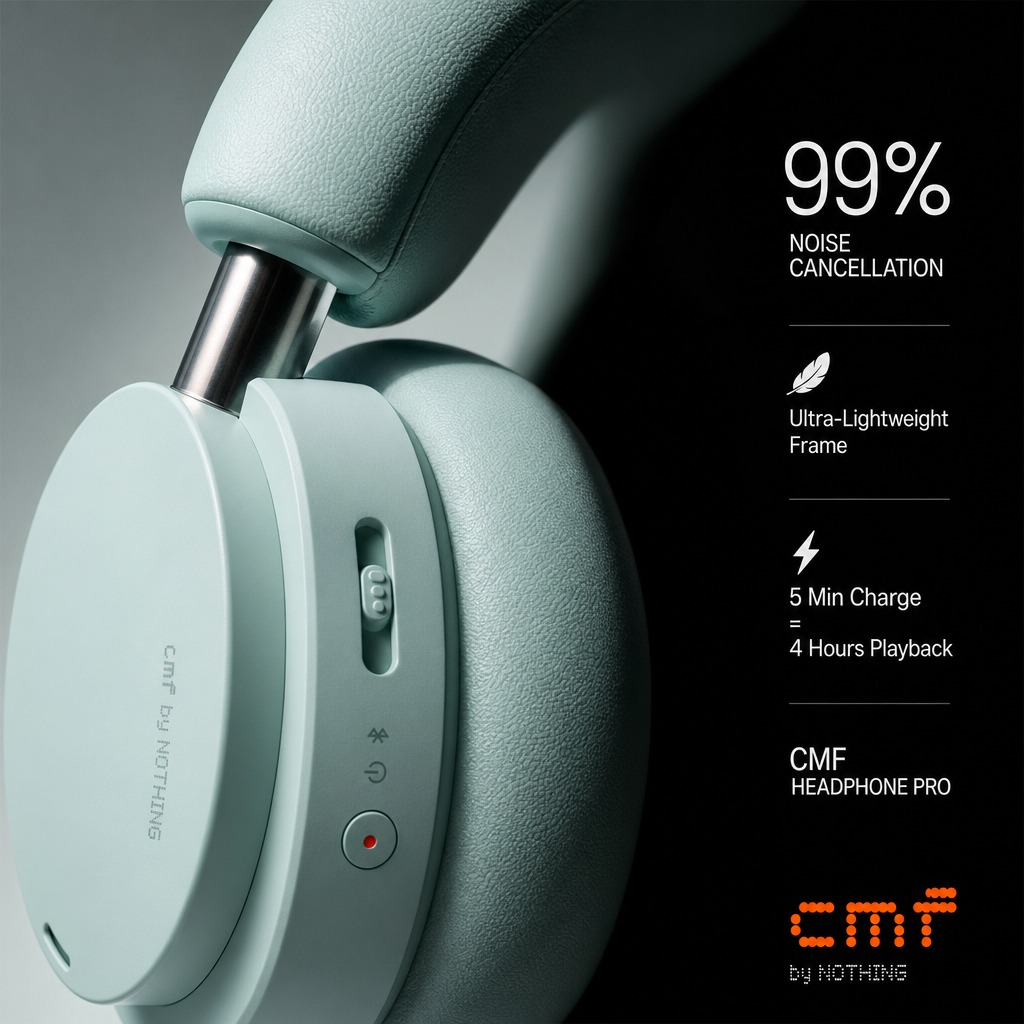
Spec copy rendered as design. "5 min charge = 4 hours playback" is the ad's best line, and it works because it is typeset as a specification, not buried in a paragraph. Text-only agents cannot make this decision; render-capable ones make it by default.
Where every agent still fails (and what remains your job)
- Claim verification. Agents inherit the page's claims and occasionally embellish them. You review numbers, superlatives, and anything a regulator or Meta's ad standards would read twice. Non-negotiable, five minutes per batch.
- Taste. An agent ranks its outputs by its own logic, not your brand's soul. Expect to kill a third of any batch on voice alone, and treat that as the system working.
- Novel positioning. Agents remix what exists (your page, your category's patterns). A genuinely new brand position, the "1984" move, still comes from a human. Agents scale positions; they rarely invent them.
- The long game. Agents optimize per-batch. Deciding that this quarter is about switching from discount copy to identity copy is strategy, and it is yours.
How to choose a genAI marketing agent for ad copy
Four questions, in order:
- What does it read? If the answer is "your prompt," it is a chatbot. It should ingest your product URL or catalog unprompted.
- Does it plan angles per audience, and show you the plan? The plan is the product; drafting is commodity.
- Does it render? Text-only output means you still need a designer or another tool. End-to-end (copy on finished, sized creatives) is the difference between an assistant and a pipeline. This matters most for teams without a designer.
- Can you audit claims easily? Look for output tied back to source (which page claim produced this line). Harder to find, worth prioritizing.
LocalAds answers those four as: reads your product URL; builds and shows a strategy tree of audiences, angles, and hooks; renders every angle onto finished, on-brand creatives sized for Meta, TikTok, Pinterest, and YouTube (animatable to video); and keeps copy anchored to your page's real claims. The examples in this post are unedited outputs of that pipeline. If your bottleneck is specifically copy ideation and you want to stay hands-on, a chatbot with strong prompt patterns remains the cheap and honest alternative.
FAQ
What's the best genAI marketing agent for ad copy generation? The best agent is one that researches your actual product (from a URL, not a prompt), plans distinct angles per audience, and renders the copy onto finished creatives rather than stopping at text. LocalAds is built as that pipeline. Text-only agents are better thought of as copy generators, useful, but they leave the design half of the ad to you.
How is a marketing agent different from ChatGPT? ChatGPT completes prompts; an agent runs a pipeline (research, audience segmentation, angle planning, drafting, rendering) and makes strategy decisions before writing. The output difference: an agent's ten variants target different audiences with different claims, while a chatbot's ten variants rephrase one idea.
Can genAI agents write compliant ad copy? Mostly, when grounded in your product page, because the claims start from what you actually state. But agents can drift or embellish numbers across a batch, and both the FTC and ad platforms hold you, not the software, responsible. Human claim review per batch is the standing rule.
Do genAI marketing agents replace copywriters? They replace the volume production of angle-driven performance copy. They do not replace positioning, taste, or the judgment that kills the off-brand third of every batch. Teams shift copywriter time from drafting to selection and strategy.
How much ad copy variation do I actually need? More than one concept per audience. Modern broad-targeting campaigns sort creatives by performance, so coverage of the audience-angle matrix beats polishing a single ad. This is why agentic coverage matters: it fills the matrix, including cells you would not have bet on, and creative fatigue retires winners fast enough that the pipeline never really stops.
The takeaway
"GenAI marketing agent" means something specific: a system that decides who, what pain, and which claim before writing a word, and ideally renders the result into a shippable ad. Judge tools by what happens between input and output, keep the claim review and the taste decisions human, and let the agent do what it is structurally better at: covering the whole angle matrix instead of your three favorite ideas.
Related reading:
- 30 ChatGPT Ad Copy Examples That Actually Convert
- What's the Best AI Ad Platform for Non-Experts?
- Best AI Tools for Ad Creative Management
- Generate Ads From a Product URL
- ChatGPT ads creative from your product URL
- The ChatGPT Ads guide: markets, formats and specs
- ChatGPT Ads Specs 2026: Every Character Limit, Reconciled