On this page
Most "ChatGPT ad copy" articles give you prompts and leave you to imagine the output. This one does the opposite: 30 finished ad copy examples, the kind ChatGPT produces when it is prompted well, organized by format and annotated with the pattern behind each one. Steal the patterns, not the words.
Two honest notes before the list. First, every example here follows a named formula, because that is the real lesson: ChatGPT writes convertible copy when you give it a pattern to fill, and generic copy when you do not. If you want the prompts that produce output like this, we keep tested libraries for D2C brands and skincare brands. Second, copy is half an ad. We will show what the other half looks like as we go.
The six patterns behind every example
| # | Pattern | Formula | Best for |
|---|---|---|---|
| 1 | Problem-agitate | Name the pain, twist the knife, resolve | Cold audiences |
| 2 | Specific-claim | One number or concrete detail carries the ad | Skeptical buyers |
| 3 | Identity | Describe who the buyer becomes, not what the product does | Lifestyle and treat categories |
| 4 | Objection-flip | Say the quiet doubt out loud, then answer it | Considered purchases |
| 5 | Offer-led | Deal, bundle, or guarantee up front | Warm audiences, retargeting |
| 6 | Contrast | Before/after, us/them, old way/new way | Category switchers |
Every example below is tagged with its pattern number.
Meta primary text examples (1-6)
1. (Problem-agitate, supplements) "You drink the greens. You take the vitamins. You still hit a wall at 3pm. Your energy problem is not effort, it is absorption. Fixed that."
2. (Specific-claim, cookware) "This pan survived 1,847 dishwasher cycles in testing. Your old nonstick lost its coating after 40. That is the whole ad."
3. (Identity, coffee) "Some people have a morning routine. You have a launch sequence. Small-batch beans for people whose 6am looks like other people's noon."
4. (Objection-flip, mattress) "Yes, buying a mattress online sounds like a gamble. That is why you get 200 nights to lose the bet, and we pay for return shipping when you do. Nobody does."
5. (Offer-led, apparel) "The 3-pack costs less than two singles. That is not a sale, that is just how we price it. Stock up once, stop thinking about t-shirts for a year."
6. (Contrast, meal kits) "Old way: 40 minutes of chopping after a 9-hour day. New way: 15 minutes, one pan, and the exact amount of ginger the recipe needs. Dinner should not have a prep phase."
Why these work: each one commits to a single pattern and a single point. The most common ChatGPT failure mode is copy that hedges across three angles in one paragraph. Constrain it to one pattern per output and the quality jumps.
Headline and hook examples (7-16)
7. (Specific-claim) "49 grams. Zero excuses." 8. (Problem-agitate) "Ate a salad. Still bloated." 9. (Identity) "For people who read the ingredients first." 10. (Contrast) "Your gym bag called. It wants better socks." 11. (Objection-flip) "Too good to be real leather? It isn't real leather. That's the point." 12. (Offer-led) "First box is on us. The obsession is on you." 13. (Problem-agitate) "Your dog is bored, not bad." 14. (Specific-claim) "Brewed for 18 hours. Gone in 4 minutes." 15. (Identity) "Main character energy, 5.5oz at a time." 16. (Contrast) "Death to the afternoon slump."
Two of these are worth seeing on a finished creative, because a headline reads differently sitting on a real ad than it does in a list. Here is the identity pattern (#15's cousin) carrying an entire creative:
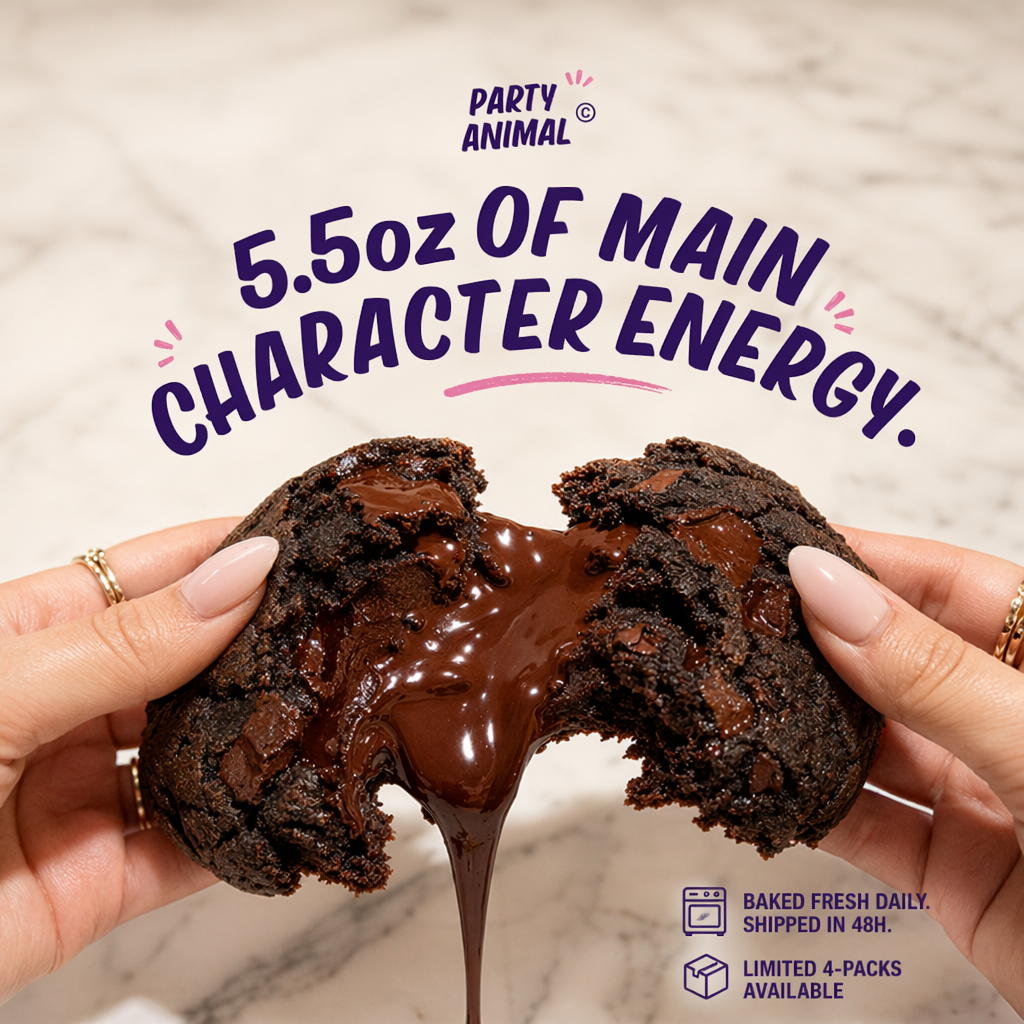
A real LocalAds output for a cookie brand. Identity copy ("main character energy") does the audience targeting that interest checkboxes used to do: the person who screenshots this ad has self-selected. Note how little the copy says about the product, and how much it says about the buyer.
And the reward-identity variant, aimed at a completely different persona from the same product:
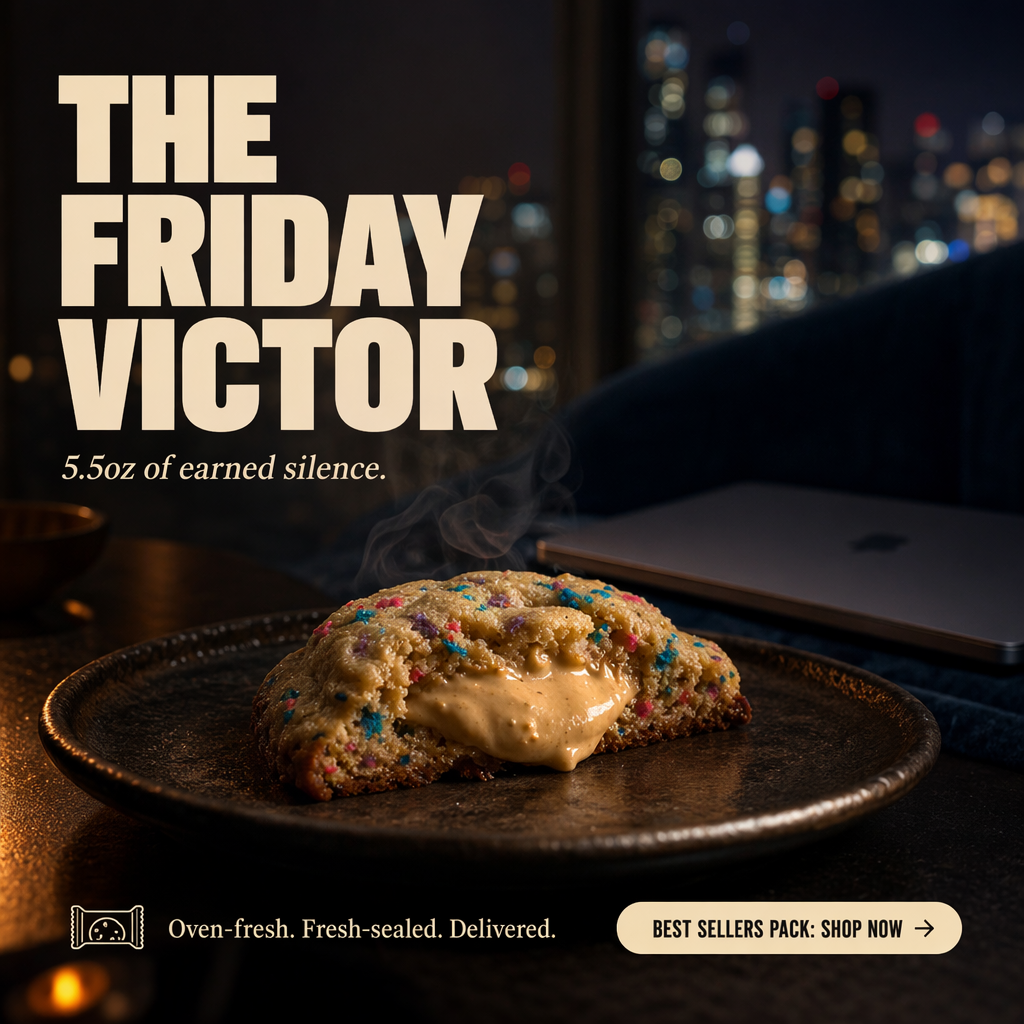
Same brand, same cookie, different buyer: the end-of-week professional. "Earned silence" is doing surgical audience work. When people ask why they need ten creatives instead of one, this pair is the answer: one product supports many personas, and each persona needs its own copy.
Problem-aware angle examples (17-20)
17. (Skincare) "Retinol works. Your skin barrier just wishes it worked slower. Meet the buffered version."
18. (Home office) "Your back does not hurt because you are getting old. It hurts because your chair was designed for someone else."
19. (Baby products) "The 2am feed is hard enough without a bottle warmer that takes 11 minutes. Ours takes 90 seconds."
20. (Pet food) "Itchy paws in spring are not 'just allergies.' They are an ingredient list problem wearing an allergy costume."
Why these work: each names a pain the buyer has felt but not articulated. ChatGPT is genuinely good at this move when you feed it real customer reviews and ask it to find the unspoken complaint.
Offer and urgency examples (21-24)
21. "Beyond the hype: 4 huge cookies, 0 filler, $49.99 with free shipping. The math does itself."
22. "Bundle the set, save 30%, and stop rationing the good moisturizer like it is wartime."
23. "Last restock sold out in 6 days. This is not scarcity theater, we literally bake in small batches."
24. "Free returns for 60 days. Wear them outside. On gravel. We mean it."
Number 21 exists as a real creative, and the comparison is instructive:
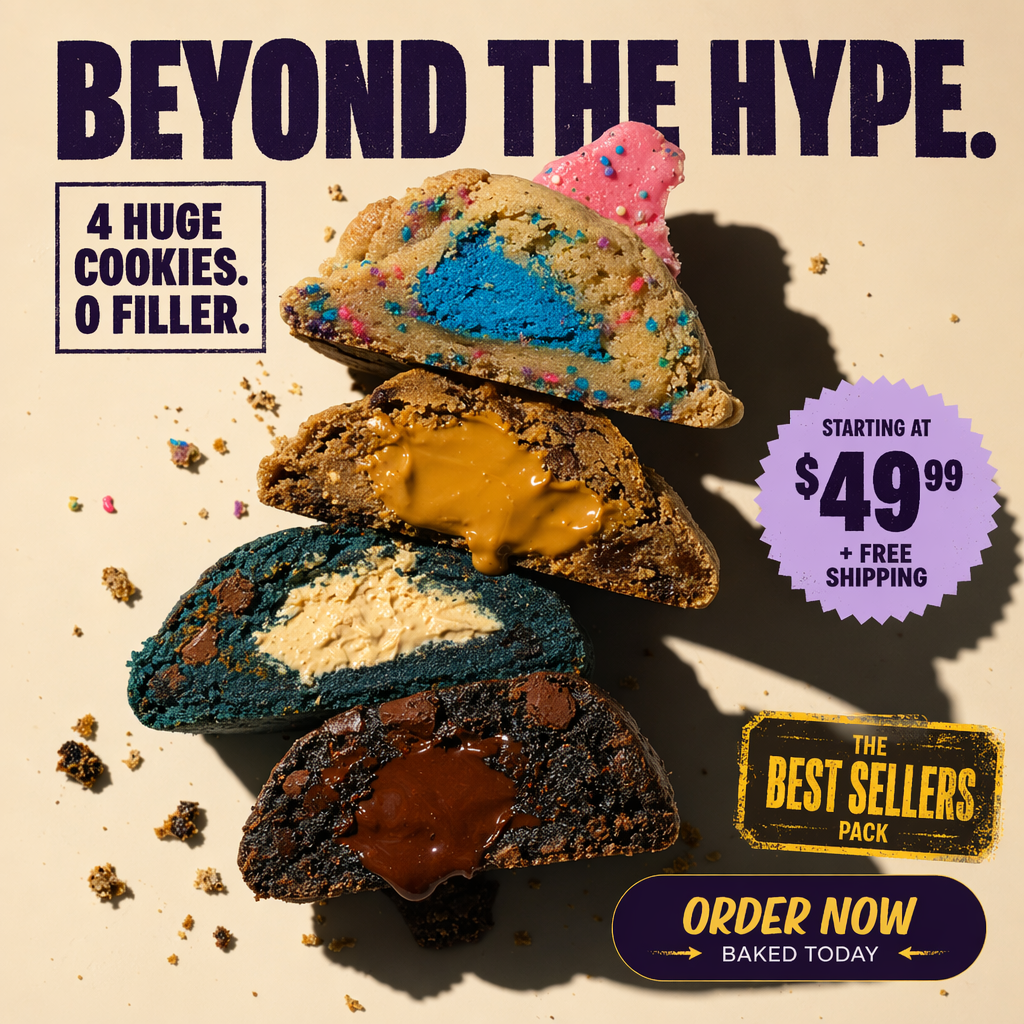
Offer-led copy on a real LocalAds creative. On the finished ad, the price lives in a badge, the offer in a sticker, and the headline stays clean. Offer copy works best when the design carries the numbers, which is a layout decision, not a writing decision. Writing it as one sentence (like #21 above) is what you do when you only control the text field.
One honest caution on urgency: scarcity claims are regulated advertising claims. If ChatGPT writes "only 12 left" and that is not true, that is your legal problem, not the model's. The FTC's advertising guidance requires claims to be truthful and substantiated, and Meta's ad standards add platform enforcement on top. Edit accordingly.
Identity copy examples (25-27)
25. (Fitness) "You do not need motivation. You need shorts that stay out of the way."
26. (Stationery) "For people whose to-do list has a to-do list."
27. (Fragrance) "Smell like the version of you that answers emails in one line."
Amazon bullet examples (28-30)
28. "COATED, NOT PAINTED: the ceramic layer is bonded at 400°F, which is why it looks the same in year three as day one."
29. "ONE CHARGE = 6 WEEKS: tested at 8 brushing minutes per day, not the lab-fantasy 2 minutes competitors quote."
30. "FITS EVERY STANDARD CRIB: 52 x 27.6 inches exactly, because 'universal fit' should be a measurement, not a vibe."
Why these work: Amazon bullets convert when the capitalized lead is a benefit and the sentence that follows is proof. ChatGPT defaults to feature lists; force the benefit-then-proof structure and the output becomes usable.
What ChatGPT cannot do with these examples
Here is the part most listicles skip. Copy this good still is not an ad. It needs a product image, a layout, brand styling, and the right size for each placement, and Meta's own creative guidance treats the visual as the primary driver of performance. In our own runs, the same headline tested across different generated scenes changes click-through meaningfully; the words are the constant, the creative is the variable.
That production step is what LocalAds automates: it reads your product URL, writes copy in these same patterns from your page's real claims, and renders it onto finished, on-brand creatives (the three cookie ads in this post are unedited outputs). If your bottleneck is turning good copy into shippable ads at volume, that is the tool category to look at, and you can generate ads from your product URL to test it against your current workflow.
FAQ
What are good ChatGPT ad copy examples? Good examples follow a single named pattern per output: problem-agitate, specific-claim, identity, objection-flip, offer-led, or contrast. The 30 examples in this post are organized by those six patterns across Meta primary text, headlines, problem-aware angles, offers, identity copy, and Amazon bullets.
How do I get ChatGPT to write ad copy like these examples? Give it three things: one pattern to follow, your product's real claims and reviews as source material, and a hard format constraint (character count, structure). Copy degrades when the prompt asks for "great ad copy" in general. Tested prompt libraries are in our D2C prompts guide.
Is ChatGPT ad copy good enough to run without editing? No. Two edits are non-negotiable: a claims check (ChatGPT invents numbers and superlatives that must be substantiated under FTC rules) and a voice pass (default output skews generic-clever). Budget five minutes per batch.
Can ChatGPT write the whole ad, not just the copy? Not alone. ChatGPT produces text; an ad is copy rendered onto a designed creative in platform-specific sizes. Pair it with a design workflow, or use a URL-to-creative tool that generates the copy and the finished visual together.
The takeaway
Patterns beat prompts. All 30 examples reduce to six formulas, and ChatGPT executes any of them well once you name it, feed it real product claims, and constrain the format. Keep the claims honest, give every persona its own angle, and remember the words are only half the ad. The other half is the creative they sit on, and that half is now generatable too.
Related reading:
- ChatGPT Ad Copy Prompts for D2C Brands
- ChatGPT Ad Copy Prompts for Skincare Brands
- Generate Ads From a Product URL
- Best AI Tools for Ad Creative Management
- ChatGPT Ads Specs 2026: Every Character Limit, Reconciled
- ChatGPT ads creative from your product URL
- The ChatGPT Ads guide: markets, formats and specs