On this page
Most AI image model comparisons are built on cherry-picked prompts and demo images. This one is built on production volume: LocalAds has generated more than 6,000 ad creatives for real D2C and ecommerce brands across Google's Nano Banana 2 (Gemini 3.1 Flash Image), OpenAI's GPT-Image 2 and GPT-Image 1.5, and ByteDance's Seedream 4.5. Same pipeline, same brands, same job: turn a product page into an ad someone would actually run.
That gives us an unusual dataset for answering the question that actually matters: not "which model makes the prettiest picture" but "which model makes the best ad", where the product has to stay accurate, the text has to be spelled correctly, and the layout has to survive a phone screen.
The cleanest way to show the differences is the same product through every model. Below is one Adidas Adizero running shoe, rendered by all four.
Nano Banana 2 (Gemini 3.1 Flash Image): the scene builder
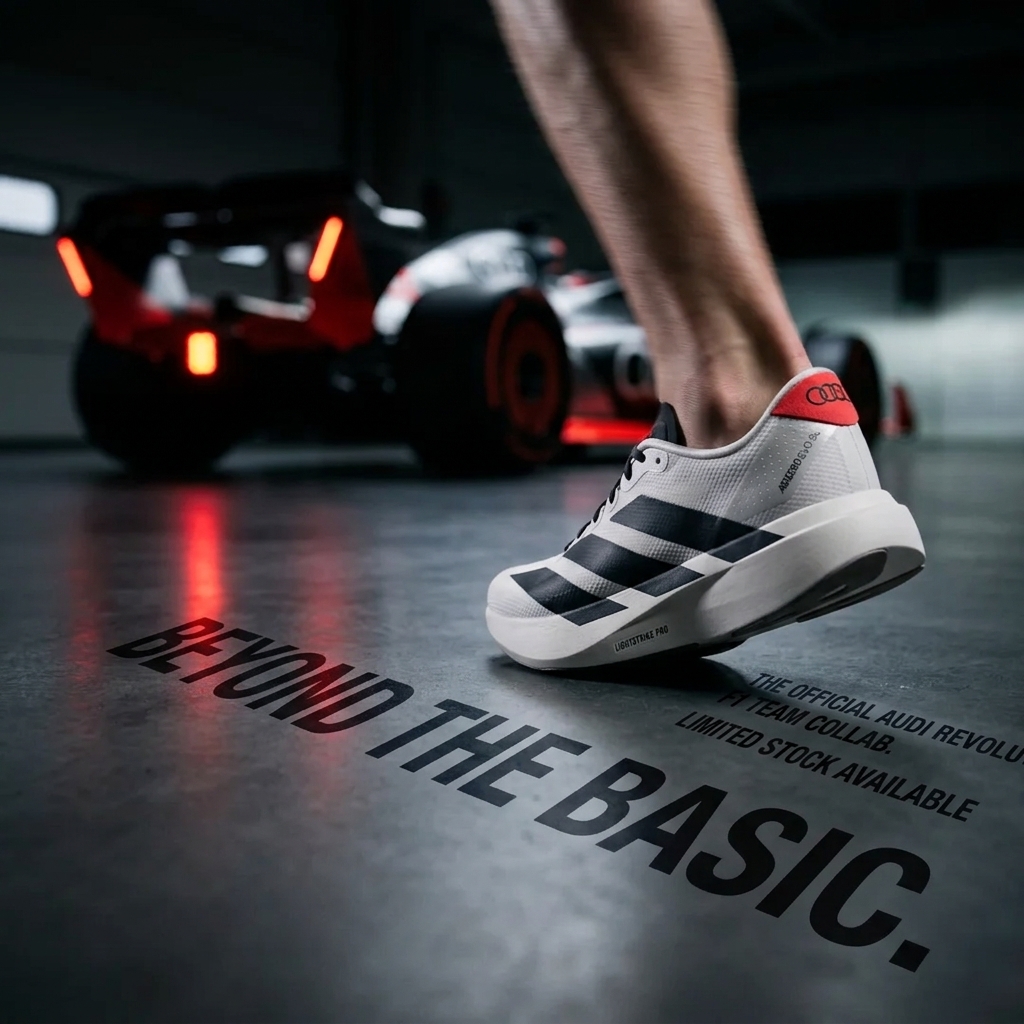
Nano Banana 2: cinematic scene construction, dramatic lighting, and typography integrated into the environment (painted on the floor, in perspective) rather than overlaid on top.
Nano Banana 2 is our highest-volume model in production, and this image shows why. It builds scenes with real art direction: the F1 car in the background ties to the product's actual collab story, the lighting is coherent, and the headline is rendered into the floor with correct perspective. It is also the strongest of the four at keeping a supplied product faithful while changing everything around it, which is the core requirement for ecommerce work.
Weaknesses: long copy. Past a headline and a sub-line, text accuracy starts to wobble, so we route text-heavy formats elsewhere.
GPT Image 2: the layout designer
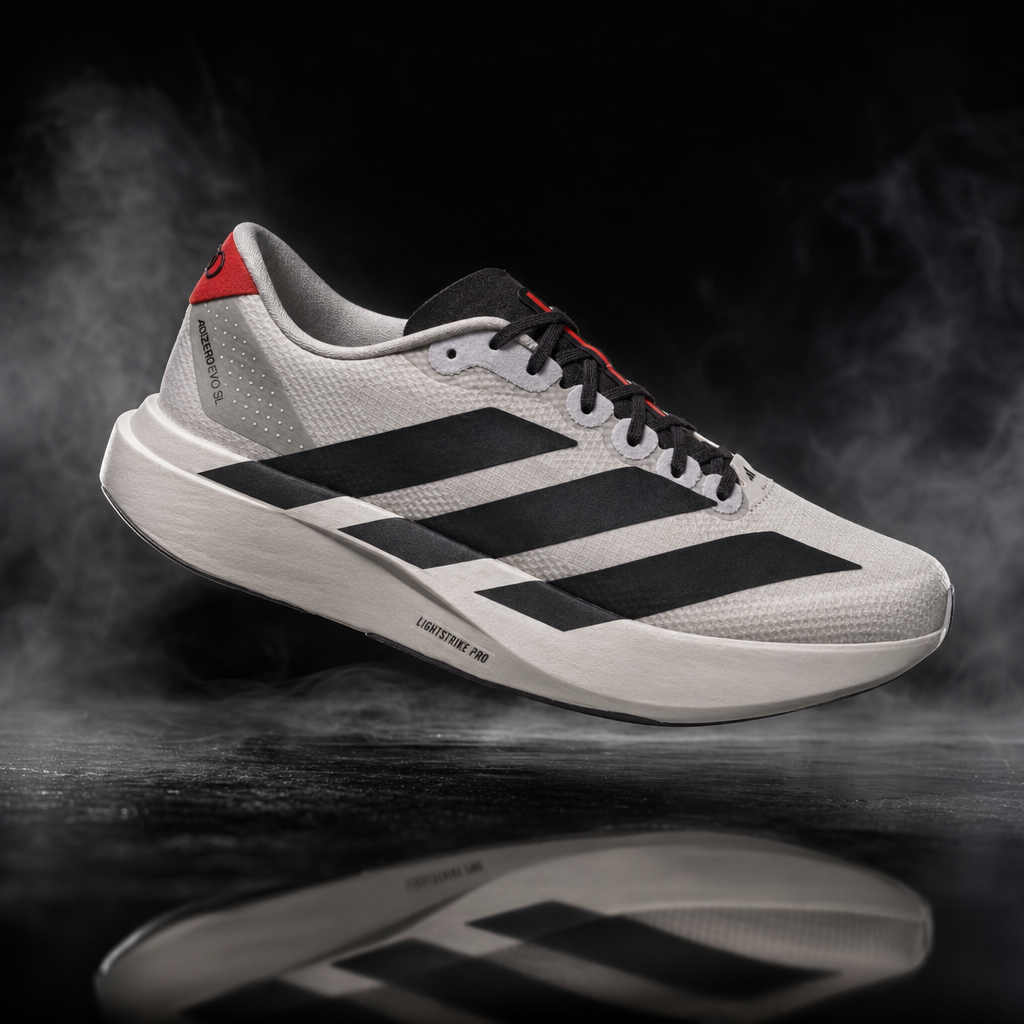
GPT-Image 2: clean, controlled, studio-grade product rendering. Where it really pulls ahead is structured layouts with lots of accurate text.
GPT-Image 2 is our other production workhorse, nearly tied with Nano Banana 2 in volume. Its strength is design discipline: infographic-style ads, benefit callouts, price tags, CTA buttons, and multi-element compositions where every word has to be spelled right. Most of the heavily text-driven creatives in our D2C examples post (the Moxie Beauty callout ad, the Knacks range ad) came from GPT-Image 2. It behaves like a designer following a brief, where Nano Banana 2 behaves like a photographer with an art director.
Weaknesses: scenes can feel staged compared to Nano Banana 2's, and generation is slower and costs more per image.
GPT Image 1.5: the budget all rounder
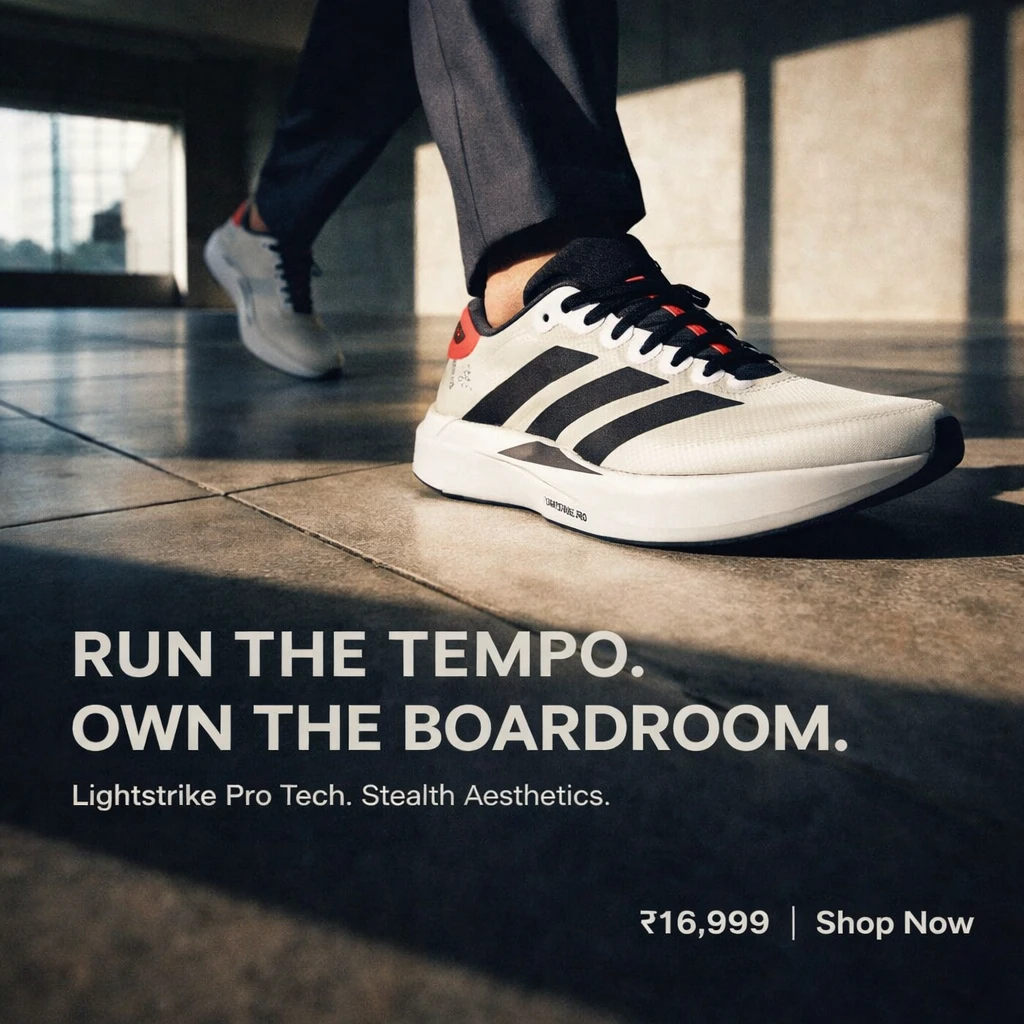
GPT-Image 1.5: a complete, ready-to-run ad with headline, feature line, price, and CTA, all accurate. Less polish than its successor, but reliable and cheaper.
GPT-Image 1.5 remains in our rotation for a reason: it produces complete ads (headline, supporting copy, price, CTA) with dependable text accuracy at a lower cost than GPT-Image 2. The rendering is a step behind on material realism, and lighting is flatter, but for high-volume testing where you want twenty distinct ads to read cleanly in a feed, it holds up.
Seedream 4.5: the typographer with a catch
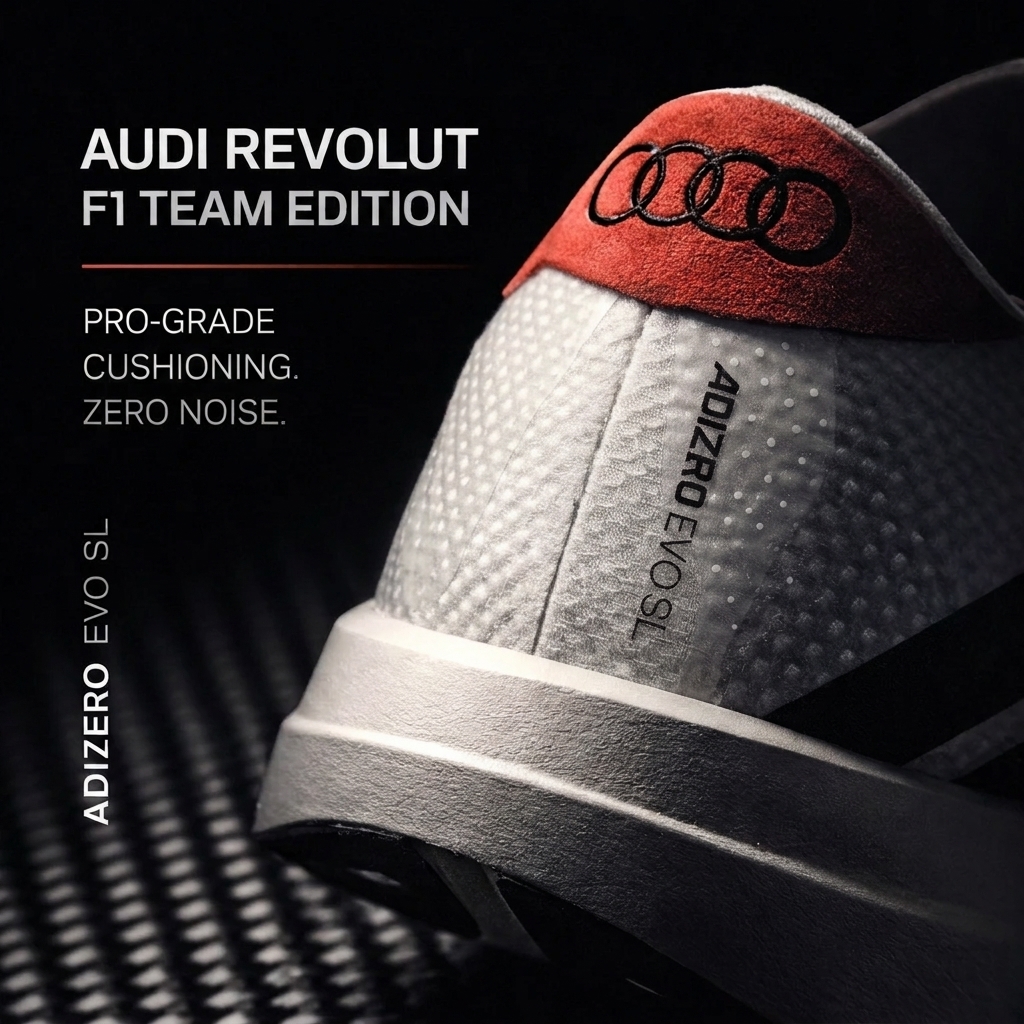
Seedream 4.5: striking editorial composition and confident display typography. Look closely at the shoe, though: the model wrote "ADIZRO" instead of "ADIZERO" on the product itself.
Seedream 4.5 produces the most magazine-like compositions of the four, with bold cropping and display type that looks genuinely designed. But this image also shows the catch, and we are publishing it because it is the honest finding: the overlay text is perfect while the text on the product drifted ("ADIZRO"). Product-surface text is the hardest problem in this category, and it is exactly the kind of error that costs trust in an ecommerce ad. We use Seedream selectively, for editorial-style creatives where the product's own labeling is simple or barely visible.
Side by side summary
| Model | Best at | Watch out for | Our production share |
|---|---|---|---|
| Nano Banana 2 (Gemini 3.1 Flash) | Cinematic scenes, product fidelity, in-scene typography | Long copy accuracy | ~47% |
| GPT-Image 2 | Structured layouts, accurate multi-line text, CTAs and callouts | Staged-feeling scenes, cost | ~47% |
| GPT-Image 1.5 | Complete ads at lower cost, reliable text | Flatter lighting, less material realism | ~5% |
| Seedream 4.5 | Editorial composition, display typography | Text on the product surface drifting | ~1% |
For context beyond our stack: Flux 2 is a strong open-weight option if you self-host, and Ideogram and Reve are worth watching specifically for typography-heavy work. We route production traffic to the four above because ad creative punishes product drift harder than any other use case, and these are the models that hold the product together at volume.
The conclusion that actually matters
After 6,000+ production creatives, our strongest finding is that no single model wins. The winning setup is routing: scene-led creatives to Nano Banana 2, layout-and-text-led creatives to GPT-Image 2, volume fills to GPT-Image 1.5, editorial swings to Seedream 4.5. The model choice follows from the strategy (the audience, angle, and hook the ad is built on), which is the part most tools skip entirely. That strategy layer is what we covered in Generate Ads From a Product URL.
This is also why "which model should I use?" is usually the wrong question for a brand. You should not have to care. The tool's job is to pick the right model per creative and keep your product accurate across all of them.
FAQ
Which AI image model is best for ad creatives in 2026? There is no single winner. In our production data, Nano Banana 2 (Gemini 3.1 Flash Image) leads for cinematic scenes and product fidelity, GPT-Image 2 leads for structured layouts with accurate text, GPT-Image 1.5 is the value option, and Seedream 4.5 produces the most editorial compositions but can drift on product-surface text.
Is Nano Banana 2 better than GPT-Image 2? They are better at different jobs. Nano Banana 2 builds more convincing scenes and integrates type into the environment; GPT-Image 2 is more reliable for multi-element designed layouts, callouts, prices, and CTAs. We run both at nearly equal volume and route per creative.
Can these models keep my actual product accurate in ads? Yes, when the generation starts from your real product imagery rather than a text prompt. That is how every example in this post was made. The remaining hard case is fine text printed on the product itself, which is where models still differ most (see the Seedream example above).
What about Midjourney, Flux 2, Ideogram, and Reve for ads? Flux 2 is the strongest open-weight route if you want to self-host. Ideogram and Reve are notable for typography. Midjourney produces beautiful images but offers less of the product-fidelity control that ecommerce ads require. Our production routing reflects what survives real brand work at volume, not benchmark scores.
Do I need to choose a model myself to use LocalAds? No. LocalAds picks the model per creative based on what the ad needs (scene, layout, text density) and keeps your product faithful across all of them. You judge the output, not the infrastructure. You can see real results in the showcase or start the free trial.
The takeaway
Model comparisons built on demos tell you what a model can do once. Production tells you what it does on the thousandth real product. Our data says: route by job, keep the product real, and spend your attention on the strategy behind the ad, because that is what decides performance once the image quality bar is met.
Related reading: