On this page
India opened to ChatGPT advertisers on 2 September 2026. As ChatGPT ads in India covers, it happened without an announcement, so a good number of Indian brands still believe the door is shut.
This page is the list of things to do now that it is open, in the order that wastes the least money. Opening the account takes an afternoon. Everything else on this list is the reason brands still spend their first month getting nowhere.
Last verified: 2026-09-18. LocalAds is not an OpenAI partner and does not place ads. We make creative, so treat the recommendations here with the appropriate scepticism and check the reasoning rather than the source.
Why the account is the easy part
Opening the account takes an afternoon. The reason brands still lose their first month is that creative production has a lead time and buying does not.
A ChatGPT Sponsored card is a 1:1 square rendered at around 512 pixels, and it supplies its own title and copy fields. Almost nothing in a typical Indian D2C library fits that: the assets are text-heavy Meta statics whose argument depends on reading small copy. Port them across unchanged and you are paying a reported $25-a-day minimum to serve smudges.
So the sequence that works is: open the account, build the squares, then spend. Not open the account and spend while you figure out the creative.
One thing worth dismissing, because it is being pitched hard in India right now: "SEO and AI visibility compound, so start now" is not wrong exactly, but it is not what ChatGPT ads are, and it gets used to sell content retainers under an ads headline.
The checklist
1. Audit what you actually have
Open your creative folder and count how many assets are 1:1 with the product dominating the frame and no headline burned into the image.
For most Indian D2C brands the answer is close to zero, because the library was built for Meta feed, wholesale decks, and marketplace listings. Here is a representative example:
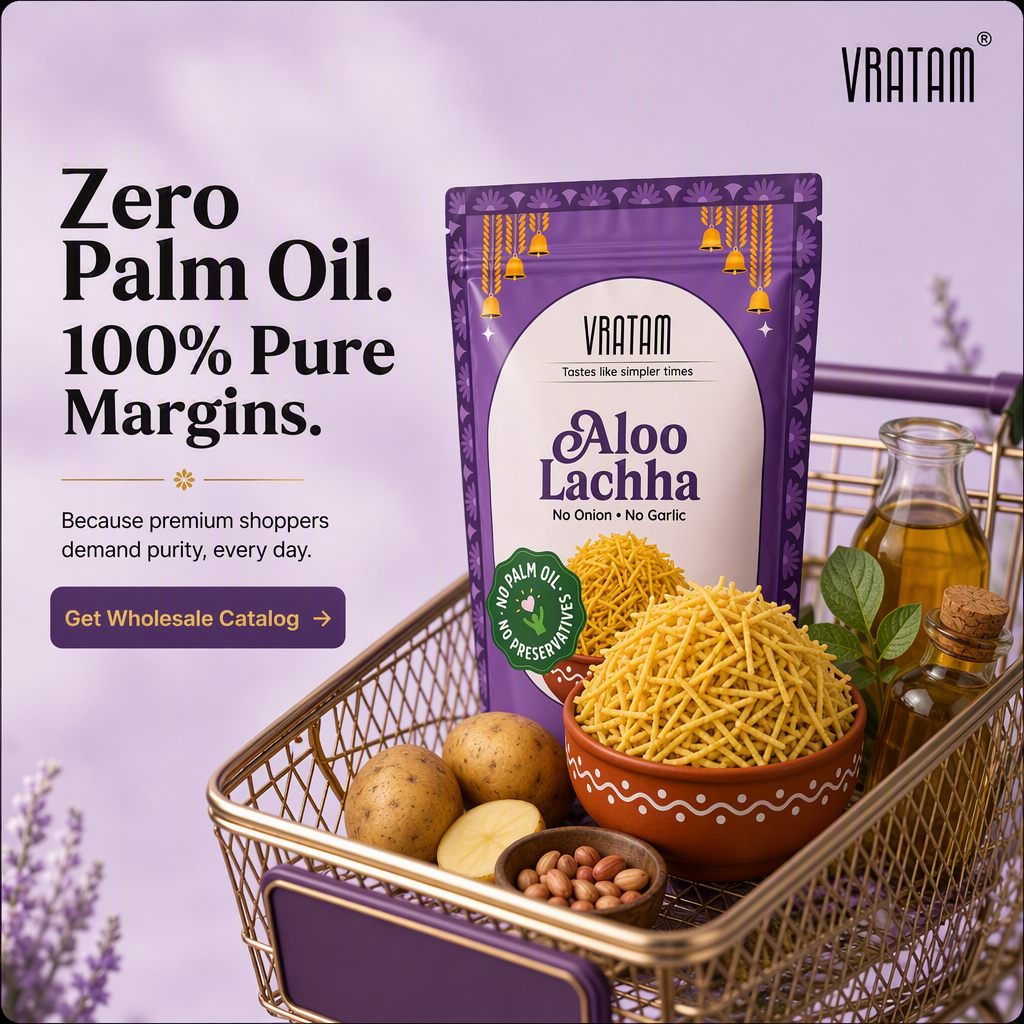
Competent work aimed at retail buyers. For a Sponsored card it is wrong on three counts: the headline duplicates the card's own title field, the CTA button is redundant because the whole card is clickable, and the message depends on reading text that will not survive the size reduction.
What the card wants instead:
Product dominant, background quiet, no competing text. You can tell what is being sold at a glance, which is the only test that matters when the image renders small.
Write down the real number. It is usually the thing that turns this from an abstract task into a scheduled one.
2. Build the square library, one per buying conversation
Not one square per product. One square per conversation you want to appear beside.
ChatGPT targeting works from context hints, topics and situations rather than exact-match keywords, so a single creative cannot stay relevant across genuinely different conversations. For a spice brand, "which turmeric actually has curcumin" and "best biryani masala brand" are different conversations that want different images.
Practical starting point: your five best-selling SKUs, three conversations each, fifteen squares. That is a real but finite project, and it is the bulk of the work.
3. Write to the character budget now
Title 16 to 24 characters. Copy line 32 to 48. Written to those limits, not trimmed down to them.
This is genuinely harder in Indian D2C copy than it looks, because a lot of category language is long: "100% natural, no preservatives, farm fresh" is 42 characters before you have said anything specific. Sit with your five SKUs and get two lines each that fit. Full detail on the limits, including why published figures disagree, in ChatGPT ads specs.
4. Clean the product feed
If you are on Shopify, the shopping unit is worth preparing separately. A Shopify-powered product-spotlight carousel with image, price, and checkout was added in March 2026, and for that unit the feed is the ad.
That means accurate live pricing, correct availability, clean product titles without keyword stuffing, and high-resolution square images. Feed hygiene is unglamorous, slow, and completely independent of market access, which makes it ideal work for a waiting period.
5. Fix the landing pages
The click arrives from a specific question. Sending it to your homepage wastes it.
Map each of the conversations from step 2 to a page that answers that question in the first screen. For most Indian D2C sites this means the collection page or a dedicated PDP section, not the homepage carousel.
6. Size the test against the real minimums
This is where Indian brands get the biggest shock. Reported starting points are around a $25 minimum daily budget and a $3 to $5 recommended maximum CPC, with CPMs cited between roughly $18 and $65 depending on topic cluster. Those figures come from third-party reporting rather than OpenAI, so confirm inside Ads Manager.
Read that against Meta CPCs in India and the difference is an order of magnitude, not a percentage. That does not make the channel bad, it makes it a different kind of buy: fewer, higher-intent conversations rather than cheap reach. Budget a real test rather than a token one, and judge it on downstream conversion rather than click volume.
If you also sell into other open markets, the same square library works there with no rework. That is now 52 markets rather than eight.
7. Watch the list, it moves without warning
India opened with no blog post, press release or advertiser email. So did the 11 Middle East and North Africa markets on the same day. The documentation is the source of truth, and it can change overnight.
If you are planning market expansion around this, check the availability list periodically rather than waiting to be told, or read our country tracker, which we update as markets move.
What this costs
Being straightforward about it: steps 1 through 5 are a few days of focused work for a small catalogue, or a few weeks for a large one. Most of it is creative production.
That is also the part LocalAds exists to compress. Paste a product URL, get 1:1 squares generated from your real product page so packaging and claims stay accurate, in the ratio the card uses. The clean square above is unedited LocalAds output. What we do not do is place your ads or guarantee a placement.
FAQ
How do Indian brands start with ChatGPT ads? Open the self-serve Ads Manager account, which has been available to Indian businesses since 2 September 2026, then build a square creative library before spending anything. Opening the account takes an afternoon; producing squares that work at 512 pixels takes considerably longer, and running Meta statics in the meantime just spends the daily minimum on unreadable cards.
What creative do I need for ChatGPT ads? A 1:1 square image, minimum 256x256 pixels with around 512x512 the practical target, with the product dominating the frame and no headline baked in, because the card supplies its own title and copy fields. Plus a title of 16 to 24 characters and a copy line of 32 to 48 characters per creative.
Can I reuse my Meta or wholesale creative? Usually not. Most Indian D2C statics are built around a headline, benefit bullets, and a CTA button, all of which duplicate what the Sponsored card provides and become unreadable at card size. The ratio is normally wrong too. A purpose-built square set is generally faster than recutting.
How many creatives should I prepare? Start with one square per buying conversation rather than per product. Because targeting is contextual rather than keyword-based, one image cannot stay relevant across different conversations. Five SKUs times three conversations is a sensible first target.
Is there a waitlist for ChatGPT ads in India? No. Registration is self-serve and open, so there is nothing to join. Treat anyone still selling early or beta access as a red flag.
When did ChatGPT ads open to Indian advertisers? 2 September 2026. India moved from Coming Soon to Available on OpenAI's availability documentation alongside 31 European markets and 11 in the Middle East and North Africa. No announcement accompanied it, which is why a lot of coverage still describes India as closed.
What does a ChatGPT ads test cost in India? Reported starting points are around a $25 minimum daily budget with a $3 to $5 recommended maximum CPC. That is an order of magnitude above typical Indian Meta CPCs, so size the test deliberately and judge it on downstream conversion rather than click volume. Confirm current figures inside Ads Manager, since these come from third-party reporting rather than OpenAI.
The takeaway
The door opened quietly on 2 September, which means the first-mover window in India is open and most brands do not know it yet. The thing that will cost you that window is not access, it is creative: a library of text-heavy Meta statics gives you nothing to put in a 512-pixel card.
So do steps 1 through 5 before you spend, size step 6 against real minimums rather than Meta habits, and keep an eye on the country list, because it has already moved once without warning.
Related reading: