On this page
Your ad account needs 40 fresh creatives this month. Your design team can make eight.
That gap is the single most common growth ceiling in D2C, and it does not close by working harder. It is structural. Paid social rewards variety, testing, and constant refresh, while a design team is a fixed-capacity resource that scales linearly with headcount and cost. The math never works. You will always want more creative than a queue of designers can produce, and every week you spend waiting is a week your winning ads fatigue while your CPMs climb.
Most teams respond by trying to hire their way out. That is the expensive answer, and usually the wrong one. The brands that actually break through this ceiling do something different: they stop treating creative as a craft project handled ad hoc and start treating it as a production system. They separate the thinking (strategy, angles, briefs) from the making (rendering variations), and they let the making scale independently of headcount.
This is the pillar guide to doing that. We will cover why creative demand structurally outpaces design capacity, the four ways teams try to scale and what each one costs, the production-system model that lets output grow without linear hiring, a numbered playbook to 10x your throughput, and where AI fits without turning your brand into generic filler. If you want the short version of the tooling question first, our best AI ad creative tool for D2C brands breakdown covers that. This post is the full system around it.
The designer bottleneck, precisely defined
The bottleneck is not that designers are slow or bad. Good designers are fast and excellent. The bottleneck is that ad creative demand is variable and spiky, while design capacity is fixed and linear.
Here is the shape of the problem. A performance account that is testing seriously needs a steady stream of new creative: new angles when old ones fatigue, new formats when a platform shifts, seasonal refreshes, promo variants, and a backlog of "let's just try this" ideas that never get made. Demand is not a flat line. It surges before launches, spikes during sale periods, and compounds as you add channels. One designer, meanwhile, produces a roughly constant number of finished assets per week no matter how the demand curve moves.
When demand exceeds capacity, a queue forms, and the queue is where creative velocity goes to die. A request that could ship today waits four days behind three others. By the time it ships the moment has passed, or you have quietly decided not to test it at all because the queue made it feel expensive. That last effect is the most damaging: the bottleneck does not just slow you down, it silently shrinks your ambition. Teams stop proposing tests they know they cannot get made.
There is a second, subtler cost. When designers are scarce, they get pulled into low-leverage work: resizing the same ad for six placements, swapping a price, changing one line of copy. That is production, not design. Every hour a skilled designer spends resizing is an hour not spent on the creative direction that actually moves the needle. The bottleneck wastes your best people on your most repetitive work.
Why creative demand outpaces design capacity
To fix the gap you have to understand why it keeps widening. Three forces push creative demand up faster than any design team can grow.
Targeting collapsed into creative. Broad audiences and Advantage+ style automation have flattened manual targeting to the point where the creative is the targeting. The algorithm decides who sees an ad based largely on which creative resonates. That means the lever you actually control is the number and variety of creative bets you put into the auction. More distinct creatives is not vanity; it is literally how you reach more segments now.
Creative fatigue is faster than ever. A winning static ad does not stay winning. On a well-spending account, a creative starts decaying in one to three weeks as frequency climbs and the novelty fades. To hold performance flat you have to keep feeding the account fresh assets. To grow, you have to feed it faster than it fatigues. Every channel you run multiplies this refresh treadmill.
Testing is a numbers game. You cannot know in advance which angle wins. The comfort angle might beat the performance angle three to one, or the reverse. The only way to find out is to test both, which means producing both, plus the eight other angles you also cannot pre-judge. Real creative-led growth needs 10 to 20 fresh variations per test cycle, and most teams run multiple cycles a month.
Stack these together and the demand curve is not linear, it is compounding: more channels times faster fatigue times more angles per cycle. No hiring plan keeps pace with a compounding curve. You need a different kind of leverage.
The four ways teams try to scale (and what each costs)
When output has to grow, teams reach for one of four options. Each has a real place, and each has a failure mode. Here is the honest comparison.
| Approach | Speed to first asset | Cost model | Scales with volume? | Brand consistency | Best for |
|---|---|---|---|---|---|
| Freelancers | Days (once hired) | Per-project or hourly | Poorly (each hire is linear, onboarding tax) | Variable, drifts per person | Overflow spikes, specialist formats |
| Agency | 1 to 2 weeks | Monthly retainer ($3k to $15k+) | Yes, but expensive and slow | High, but at their pace | Brands wanting hands-off, big budgets |
| In-house team | Same day (if capacity free) | Salaries (fixed, high) | No, strictly linear with headcount | Highest control | Established brands with steady, high volume |
| AI creative tools | Minutes | Subscription (roughly $100 to $300/mo) | Yes, near-flat cost per extra asset | Depends on the tool, high if page-derived | Lean teams needing volume and speed |
A few things worth drawing out from that table.
Freelancers solve a spike but not the structural problem. Every new freelancer carries an onboarding tax (they have to learn your brand) and consistency drifts because ten freelancers produce ten interpretations of your look. Great for a burst; painful as a permanent scaling engine.
Agencies buy you consistency and take work off your plate, but you pay for it in both money and latency. A retainer that runs into five figures monthly still routes every request through their queue, so you have not removed the bottleneck, you have rented someone else's. Excellent for brands that want to be hands-off and can afford it; a poor fit for a lean team that needs to test tomorrow. We compare this tradeoff in detail in our look at the best AI ad creative tool for D2C brands.
In-house teams give you the highest control and the fastest turnaround when capacity is free, which is exactly the catch: capacity is rarely free, and the only way to add capacity is to add salaries. This is the option that scales worst with volume because it scales strictly one-designer-at-a-time.
AI creative tools are the only option where the cost of the next creative is near zero and the time to produce it is minutes, not days. The open question, and the one that matters most, is brand consistency. A weak tool generates generic filler. A strong one derives the creative from your actual product page so every asset is on-brand by construction. That distinction is the whole game, and we will come back to it.
The insight the table points to: none of these is purely better. The winning move for most lean D2C brands is not picking one, it is building a production system where AI handles the high-volume repeatable making, and your human talent (in-house or freelance) is redeployed onto the parts of the work that actually need judgment.
The production system model: brief to variations to QA to ship
Here is the mental shift that unlocks scale. Stop thinking of creative as individual assets a designer crafts one by one. Start thinking of it as a pipeline with distinct stages, where each stage can be optimized and, crucially, where the high-volume stage can scale without linear labor.
A creative production system has four stages:
1. Brief. The strategic input. Who is this for, what angle, what hook, what claims can we honestly make? This is thinking work. It is where brand and marketing judgment lives, and it does not scale by throwing bodies at it. It scales by being systematic.
2. Variations. The production output. Turning one brief into many on-brand executions: different hooks, formats, and placements. This is the stage that has to scale to volume, and historically it is where the designer bottleneck lives. It is also, not coincidentally, the stage AI is best at.
3. QA. The brand and quality gate. Does this look right, read right, and stay honest about the product? Does it match brand standards? This is a review pass, fast per-asset, that protects consistency at volume.
4. Ship. Formatting, sizing per placement, and pushing live into the ad account.
The reason this model works is a single principle: separate ideation from production. These are two kinds of work with two scaling laws. Ideation (the brief) is high-judgment and low-volume: you need a handful of strong ideas, not hundreds. Production (the variations) is low-judgment and high-volume: once the idea is set, making 15 on-brand versions of it is mechanical. When you fuse them, as a traditional design queue does, you force high-judgment people to do high-volume mechanical work, and everything jams.
Separate them and each runs at its natural speed. Your strategists produce a tight set of strong briefs; your production layer, whether AI or a template system, explodes each brief into variations at near-zero marginal cost; QA catches the misses; ship pushes them live. The bottleneck dissolves because the volume stage no longer depends on the scarce resource.
The second principle that makes this compound is template and system reuse. Every brief you produce, every layout that performs, every brand rule you encode becomes reusable infrastructure. The tenth campaign is faster than the first because you are drawing on a growing library of proven angles and formats rather than starting from a blank canvas each time. A production system gets faster as it runs; a design queue stays exactly as slow as it always was.
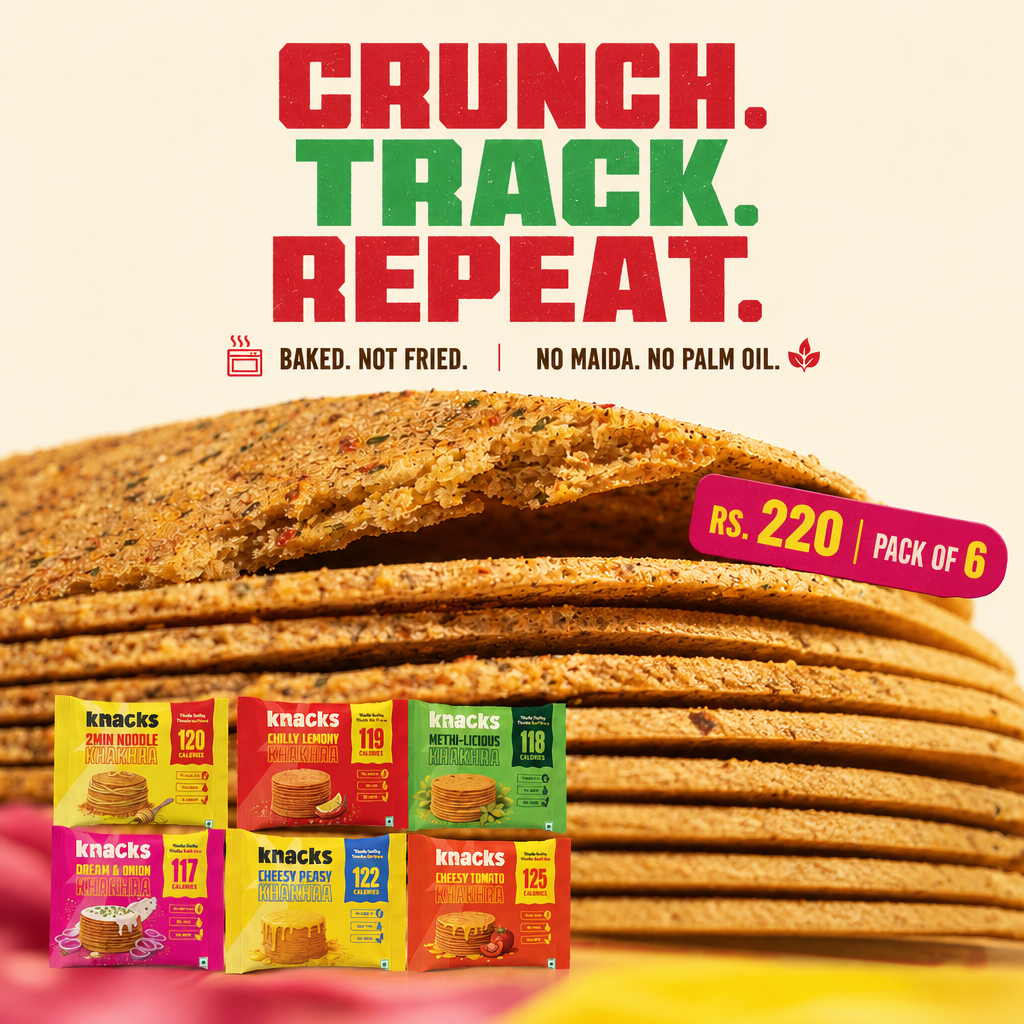
One product, one production run. This LocalAds output for the snack brand Knacks shows the full flavour range with real per-pack calorie counts and an ingredient-transparency angle. It is a single execution from a single brief, and the same product page can produce a whole spread of on-brand variations like it, each tied to a different audience and angle.
The numbered playbook to 10x your output
Theory is nice. Here is the concrete sequence a lean team runs to multiply creative output without adding designers. This is the operational core of the pillar.
1. Audit your real demand. Count the creatives you actually need per month across every channel and test cycle, not the number you currently make. The gap between those two numbers is your bottleneck, quantified. You cannot fix what you have not measured.
2. Separate strategy from production on paper. Split your creative work explicitly into "deciding what to make" (briefs) and "making it" (variations). Most teams have never drawn this line, which is why their designers drown in production. Write down which tasks are which.
3. Systematize the brief. A brief is not a vibe, it is a structure: audience persona, angle, hook, claims, format. When your briefs follow a consistent structure, they become both faster to write and machine-readable, which is what lets the production stage scale. If you want the deep version of the strategy layer, generating ads from a product URL walks through how a page becomes a full tree of audiences, angles, and hooks.
4. Move production off your designers. This is the pivotal step. The variations stage, resizing, re-hooking, reformatting, should not consume your best designers' hours. Route it to a production layer: an AI creative tool for the bulk, freelancers for the specialist edges. Your designers move up to direction and QA.
5. Build a reusable template and angle library. Every winning layout and proven angle goes into a library you draw from. This is what makes campaign ten faster than campaign one. Do not rebuild from scratch each time; compound.
6. Batch, do not trickle. Produce a full test cycle's worth of variations in one run (10 to 20 at once), not one ad at a time. Batching is how you exploit the near-zero marginal cost of the production stage. One brief in, fifteen on-brand creatives out.
7. Install a fast QA gate. With volume comes the risk of shipping something off-brand or inaccurate. A lightweight review checklist (brand match, claim accuracy, format correctness) run per asset keeps quality high without becoming a new bottleneck. Fast, not skipped.
8. Ship on a fixed cadence and read the data. Push each batch live, let it run, and read results by angle and audience, not just "the blue one won." A losing ad becomes "kill the comfort branch," a winner becomes "double the performance angle." That feedback loop is the actual engine of creative-led growth.
9. Feed the winners back into the library. The angles and formats that win become your new templates and your next briefs. The system learns. Each cycle sharpens the next, which is how output and quality both climb over time instead of trading off.
Run this loop and the 10x is not hyperbole. If a designer made eight assets a month and the production stage now makes 15 per brief across five briefs, you have moved from 8 to 75 without a single new hire, and your designers are doing higher-leverage work than before.
Where AI fits without losing brand control
The obvious objection to AI in this pipeline is brand consistency. Marketers have been burned by generic AI output: a stock-looking image, a headline that could belong to any brand, a product shot that gets the product subtly wrong. That fear is legitimate, and it is exactly why where AI sits in the system matters more than whether you use it.
The failure mode is using AI at the wrong stage: asking it to invent creative from a text prompt. Prompting forces you to compress your brand, product, and audience into a sentence the model then guesses from, and it guesses generically because a sentence is a lossy brief. That is how you get filler.
The correct placement is AI in the production stage, working from a real brief derived from your actual product page. When the input is your page (product, price, real claims, brand tone, actual colours and copy) rather than a prompt, the output is on-brand by construction. Nothing is invented. This is the difference between an AI that guesses at your brand and one that reads it.
This is the model LocalAds is built around. You paste one product URL. It reads the page and builds a strategy tree of audience personas, each with its own angle and hook drawn from what is actually on the page, then renders on-brand static creatives bound to each audience and angle, sized for Meta, TikTok, Pinterest, and YouTube. No prompting at any step. Each creative is distinct by construction because each maps to a different branch of the tree, not a font swap. The same discipline powers AI product photography from a URL when you need clean product shots rather than full ads.
The range is wider than static, too. LocalAds produces static creatives and product imagery, animates any of them into video, and generates 30-second creator-led UGC video ads with AI voiceover, all from the same product page. So a test plan that leans on video does not have to leave the workflow. The point of the production-system model is that the high-volume variation stage, which is where the designer bottleneck actually lives for most D2C brands, no longer has to be rate-limited by headcount.
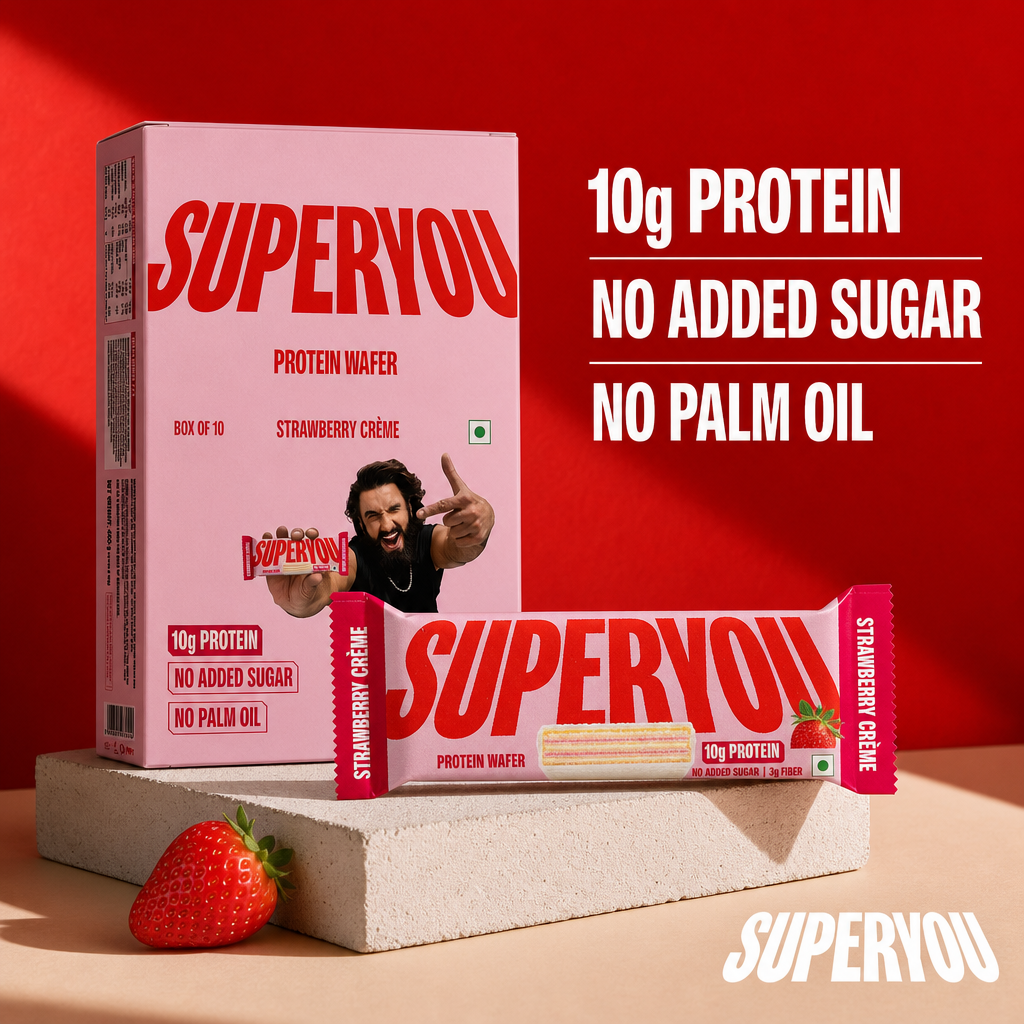
Another single production run, for the protein brand SuperYou: the claims are pulled straight from the product page and the brand-red styling matches the real brand, so the creative is on-brand without a designer touching it. One page can generate many such variations, each a different on-brand bet rather than a recolour of the same ad.
How lean teams run this today
You do not need an ops overhaul to start. A two-person marketing team can run the full loop this week: write five structured briefs on Monday, batch each into a spread of on-brand variations with an AI production layer, run a fast QA pass, ship the batch, and read results by angle on Friday. The designer you do have (or the freelancer you occasionally hire) stops resizing and starts directing, which is both higher-leverage and, frankly, a better job.
The shift is less about tools and more about the operating model: creative as a repeatable system, ideation kept separate from production, and the production stage scaled by leverage rather than by headcount. Once that model is in place, the tools slot into the production stage cleanly, and adding output no longer means adding salaries. If you are weighing which tool fits, the 2026 AI ad generator comparison lays out the honest tradeoffs between the main contenders.
FAQ
Can you really scale ad creative without hiring more designers? Yes, but only if you change the model, not just the tools. The trick is separating strategy (briefs, angles, which every brand still needs judgment for) from production (making the variations), then scaling the production stage with AI or templates instead of headcount. Designers stay on high-leverage direction and QA while the repetitive volume work moves off their plate. Hiring scales linearly and expensively; a production system scales at near-zero marginal cost per asset.
What is the difference between ad creative production and creative strategy? Strategy is deciding what to make: the audience, the angle, the hook, the claims. Production is making it: turning one brief into many on-brand executions across formats and placements. Strategy is low-volume, high-judgment work; production is high-volume, low-judgment work. Fusing them (as a design queue does) forces your best people into repetitive work and creates the bottleneck. Separating them lets each run at its natural speed.
How do I 10x creative output on a lean team? Audit your true demand, systematize your briefs into a consistent structure, batch each brief into 10 to 20 variations in a single run rather than one at a time, route that production off your designers to an AI tool or freelancers, and feed winning angles back into a reusable library. The compounding effect (winners become templates, templates speed the next cycle) is what turns a small team's output from single digits to dozens per month without new hires.
Will AI-generated ads stay on brand? They will if the AI works from your actual product page rather than a text prompt. Page-derived generation uses your real product, price, claims, colours, and copy, so the output is on-brand by construction. Prompt-based generation guesses from a compressed sentence and tends to look generic. Where AI sits in your pipeline (production, working from a real brief) matters far more than whether you use it at all.
Should D2C brands use an agency or AI tools to scale creative? It depends on budget and speed needs. Agencies deliver high consistency and take work off your plate, but cost four to five figures monthly and route every request through their queue, so latency stays. AI tools deliver volume in minutes at subscription cost but need the right setup to stay on brand. Many lean brands use both: AI for high-volume static and video production, human talent for direction, brand judgment, and the specialist formats worth shooting for real.
The takeaway
The designer bottleneck is not a talent problem or an effort problem. It is a structural mismatch between compounding creative demand and linear design capacity, and you cannot hire your way across it fast enough. The teams that win stop treating creative as a series of craft projects and start running it as a production system: strategy kept separate from production, the high-volume stage scaled by leverage instead of headcount, and every winner fed back into a library that makes the next cycle faster.
Put that system in place and your existing team produces multiples of what it did before, on higher-leverage work, without a single new salary. If you want to see the production stage in action, paste one product page into LocalAds with the free trial and watch one URL turn into a full spread of distinct, on-brand creatives, exactly the volume stage this whole system is built to unlock.
Related reading: